 Marrakech Guidebook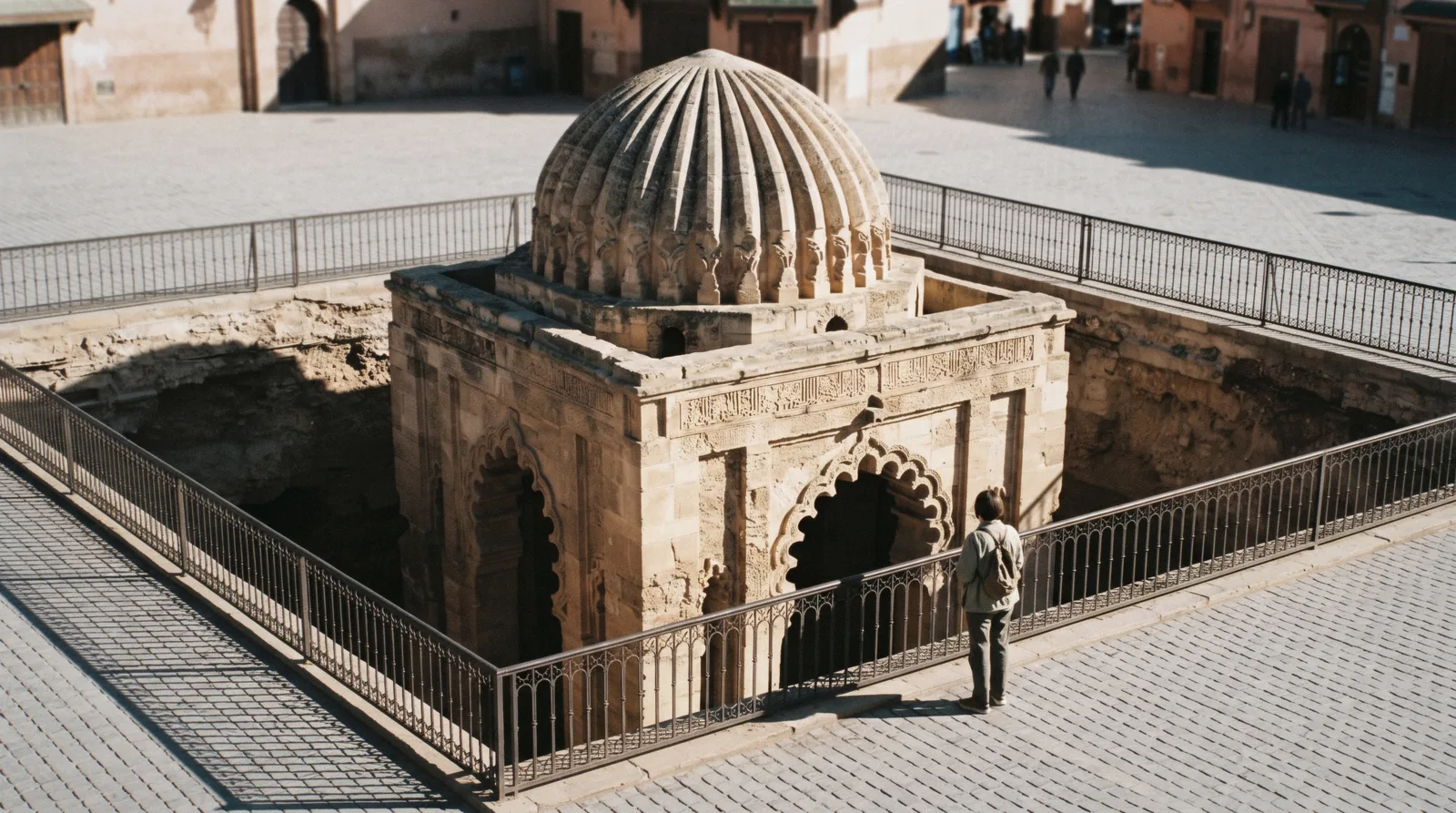
Almoravid Koubba
The Almoravid Koubba is a small brick-and-stone ablutions pavilion, 7.35 metres by 5.45 and about 12 metres tall, standing in a pit several metres below the street outside the Ben Youssef Mosque. It is the oldest surviving building in Marrakech and the only piece of Almoravid architecture left in the city, and the Ministry of Culture sells it on the same national grid as the palaces at $10.65 (100 MAD) a foreign adult, 09:00 to 17:00. This page covers what it is, why it sits underground, what to look at in the fifteen minutes it takes and how it pairs with the monuments around it; the wider ticket picture is on the tickets hub and the trip around it starts on the Marrakech guidebook home page.
Quick answer What it is, what it costs, how long it takes and why it matters, in four lines
The Almoravid Koubba is the oldest building in Marrakech, a twelfth-century ablutions pavilion measuring 7.35 by 5.45 metres. It opens 09:00 to 17:00 and a foreign adult pays 100 MAD, which is $10.65, on the same Ministry of Culture tariff as the palaces.
Key takeaways
- It is the shortest visit on this site: 15 minutes to see it properly, 30 if you stand under the dome and work out the carving. The Ministry publishes no visit length, so these routings are ours
- It stands directly opposite the Ben Youssef Madrasa, whose ticket is separate and cheaper, and the two together are the best hour in the northern medina
- No tour on this site sells the Koubba, because no operator has built a product around it. The nearest thing is a guided walk through the northern medina that passes the door
- Everything else in Marrakech is younger than this, so it is the cheapest way to understand why the Koutoubia, the madrasa and the palaces look the way they do. What each city ticket costs is on the tickets hub
Key facts
Opening hours
| Daily, as published by the Ministry | 09:00–17:00 |
|---|
Closed Not stated. The Ministry publishes no weekly closing day for the monument
Admission
- Adult
- $10.65 (100 MAD) foreign adult; $3.20 (30 MAD) Moroccan or resident adult
- Reduced
- $5.33 (50 MAD) foreign child 7 to 13; $1.07 (10 MAD) Moroccan or resident child 7 to 13
- Free
- Persons with reduced mobility; Moroccan nationals every Friday and on the first day of national and religious holidays
Planning it
- Time needed
- Not stated by the Ministry; our routing: 15 minutes to look properly, 30 if you read the dome and the excavated fountain
- Book ahead
- Optional — walk-up usually fine
- Address
- Near the Ben Youssef Mosque, Medina, Marrakech, as given on the official ticket page
Four ways to end up inside, priced from the Ministry of Culture's own page for the Coupole Almoravides and from the GetYourGuide cards that walk this quarter. Nothing on the market bundles the Koubba itself, so every guided row buys a guide and a route rather than this door.
Is this a fifteen-minute stop you add to a ticket you are already buying, or a monument you would pay a guide to explain?
| Option | Price | Includes | Cancel | Book |
|---|---|---|---|---|
| Ministry of Culture ticket, online or at the doorEveryone. This is the only row that actually opens this door, and dirhams in cash are the safe assumption | $10.65 (100 MAD) foreign adult; $5.33 (50 MAD) foreign child 7 to 13; $3.20 (30 MAD) Moroccan or resident adult; $1.07 (10 MAD) Moroccan or resident child | Admission only, sold as its own product and not combined with the museum next door | Not stated | Official site |
| Guided walk of the madrasa, Le Jardin Secret and the medina, 3.5 to 4 hoursVisitors doing the whole quarter in a morning who want someone to place the Koubba in it as they pass | Listed at $17.58 | A licensed guide across the northern medina; gate fees separate, 50 MAD at the madrasa and 100 MAD at the garden | Free up to 24 hours before | Check Availability |
| Four-hour guided circuit of the medina monuments and souksFirst-timers who want the medina's geography explained before choosing which doors to pay for | Listed at $17.47 | A licensed guide, a briefing the day before and an optional private upgrade; monument tickets separate | Free up to 24 hours before | Check Availability |
| Tailor-made private guide, half day or full dayThe only realistic way to have this particular building explained properly, because you choose the stops | Listed at $66.35 | A private licensed guide and pickup, with the stops chosen by you; entries not included | Free up to 24 hours before | Check Availability |
The 100 MAD admission stays yours to pay at the door on every guided row: no product on any platform we checked admits to this monument. Card prices move with the date and are what the platform listed when we read them. Entrance fees are the Ministry's published grid, and official ticket-office links on this site are never affiliate links.
Guided walks that pass the Koubba's door
None of these sells the Koubba itself; they are the northern-medina circuits that go past it, listed here so you can see what a guide costs beside a 100 MAD admission. Prices are the figures the platform listed when we read the cards; ratings and review counts are the operator's own.
 from $17.58
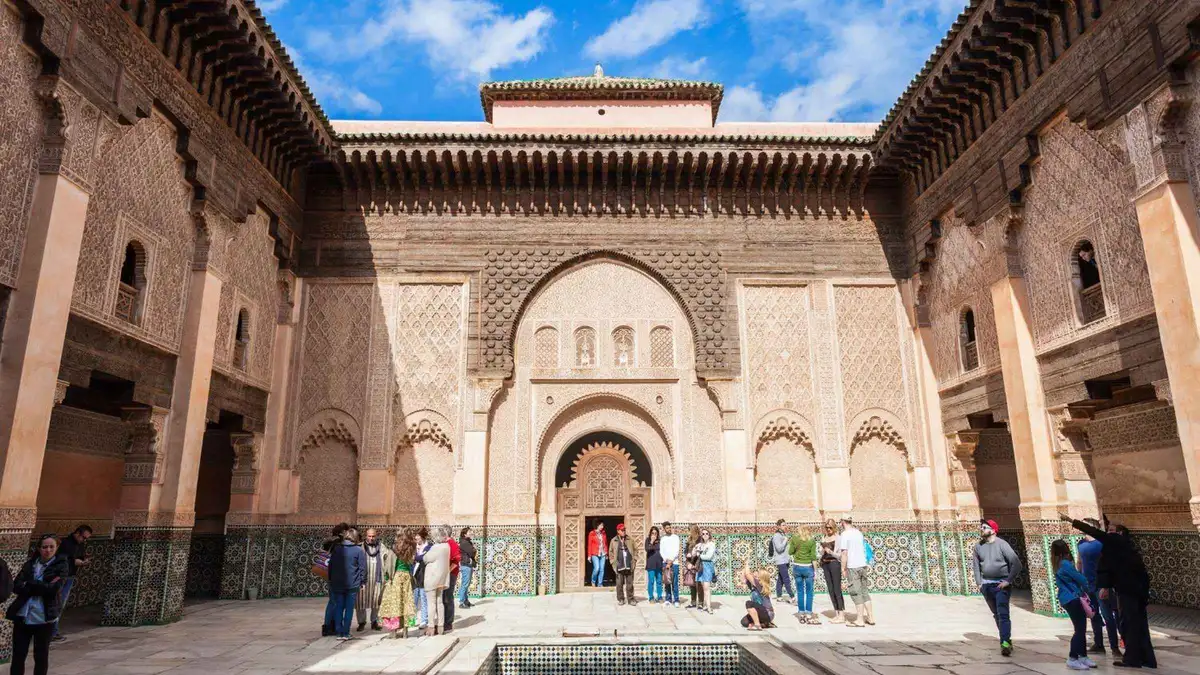
Marrakech: Madrassa Ben Youssef, Secret Garden & Medina Tour
listed at $17.58
Three-and-a-half to four-hour guided walk covering Madrasa Ben Youssef, Le Jardin Secret and the medina. Gate fees are separate and in cash: 50 MAD for the madrasa, 100 MAD for the garden.
Check Availability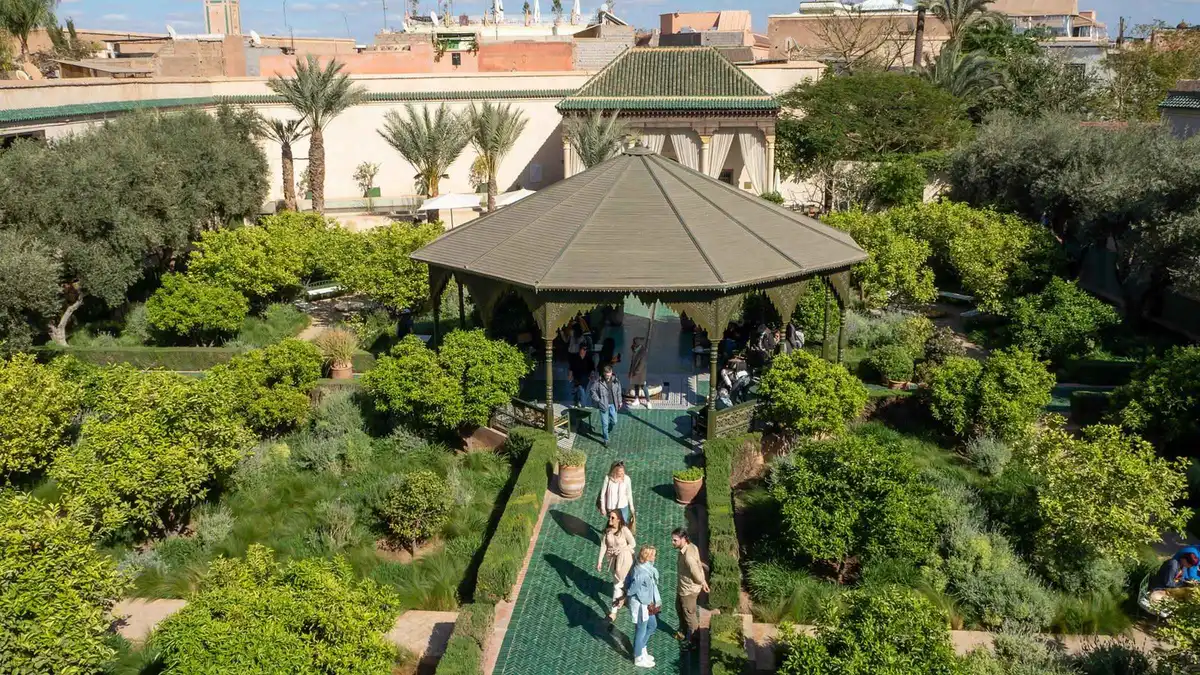 from $17.58
Marrakech: Ben Youssef Medersa, Le Jardin Secret & Souk Tour
listed at $17.58
Four-hour guided walk through Madrasa Ben Youssef, Le Jardin Secret and the souks, run in English or French. Gate fees are cash on the day: 50 MAD for the madrasa, 100 MAD for the garden.
Check Availability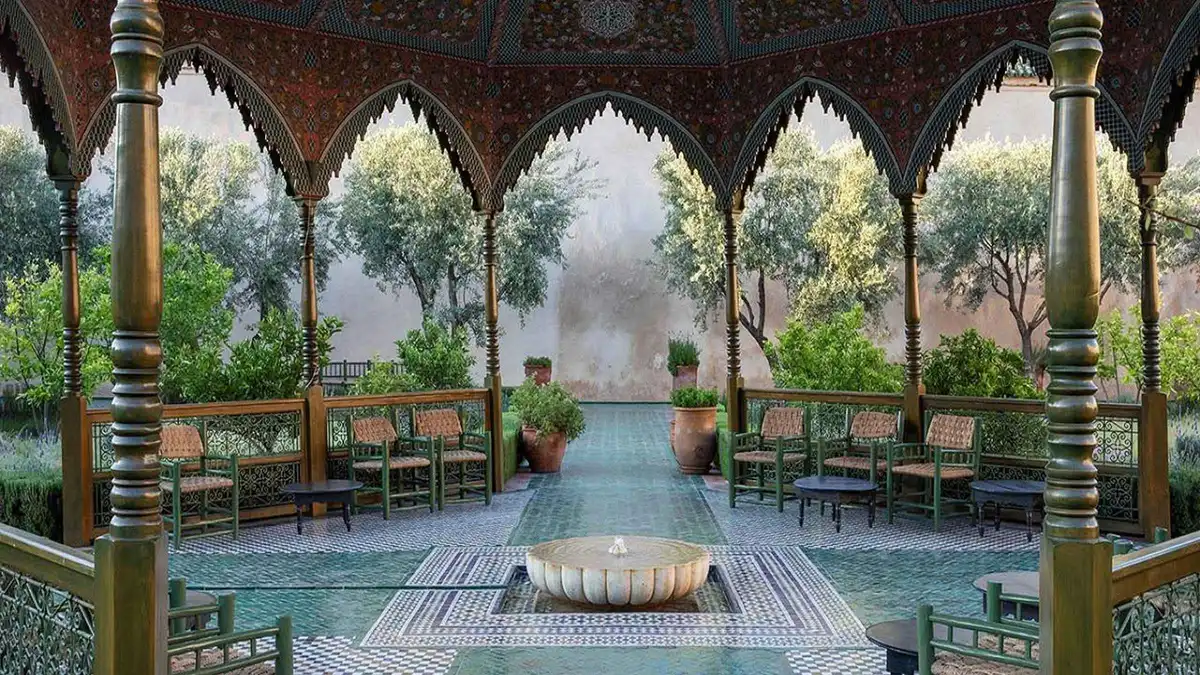 from $17.44
Marrakech: Ben Youssef, Secret Garden, & Souks Walking Tour
listed at $17.44
Three-hour walk linking Ben Youssef, Le Jardin Secret and the souks, with the guide steering the ticket queues. Entry is cash on site: 100 MAD for the garden, 50 MAD for the madrasa.
Check Availability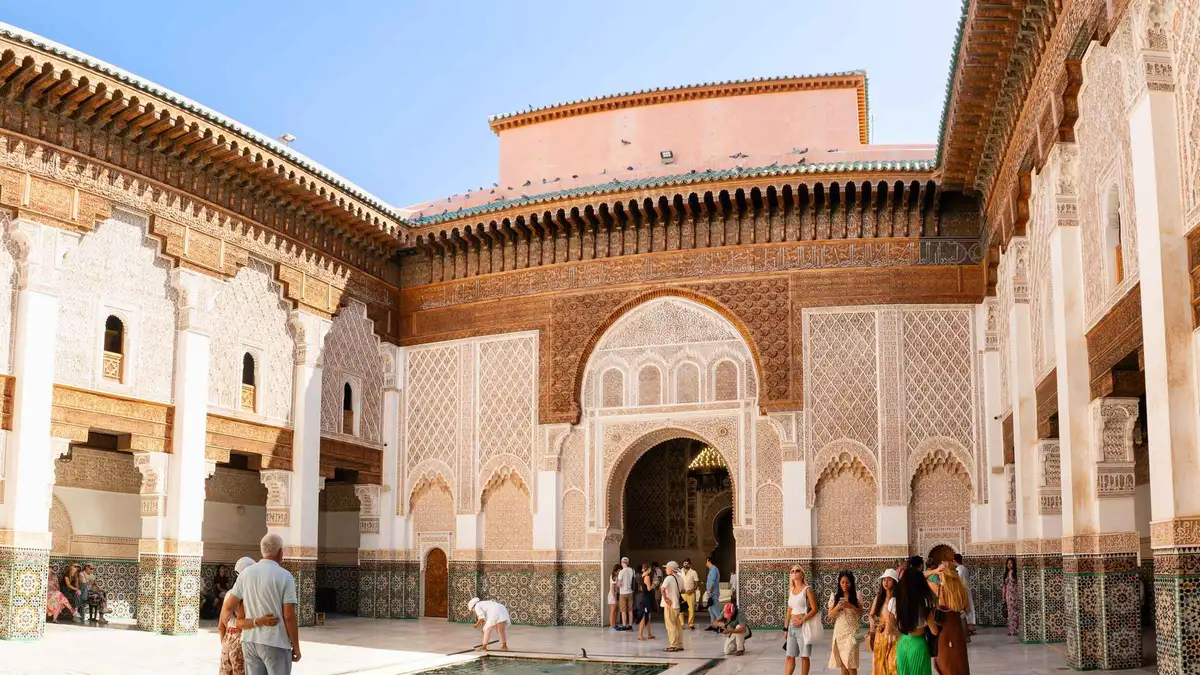 from $17.47
Marrakech: Historical Monuments, Souks & Medina Guided Tour
listed at $17.47
Four-hour licensed-guide circuit of the medina monuments, souks and lanes, with a WhatsApp briefing the day before. Private option includes riad pickup; monument tickets are separate.
Check Availability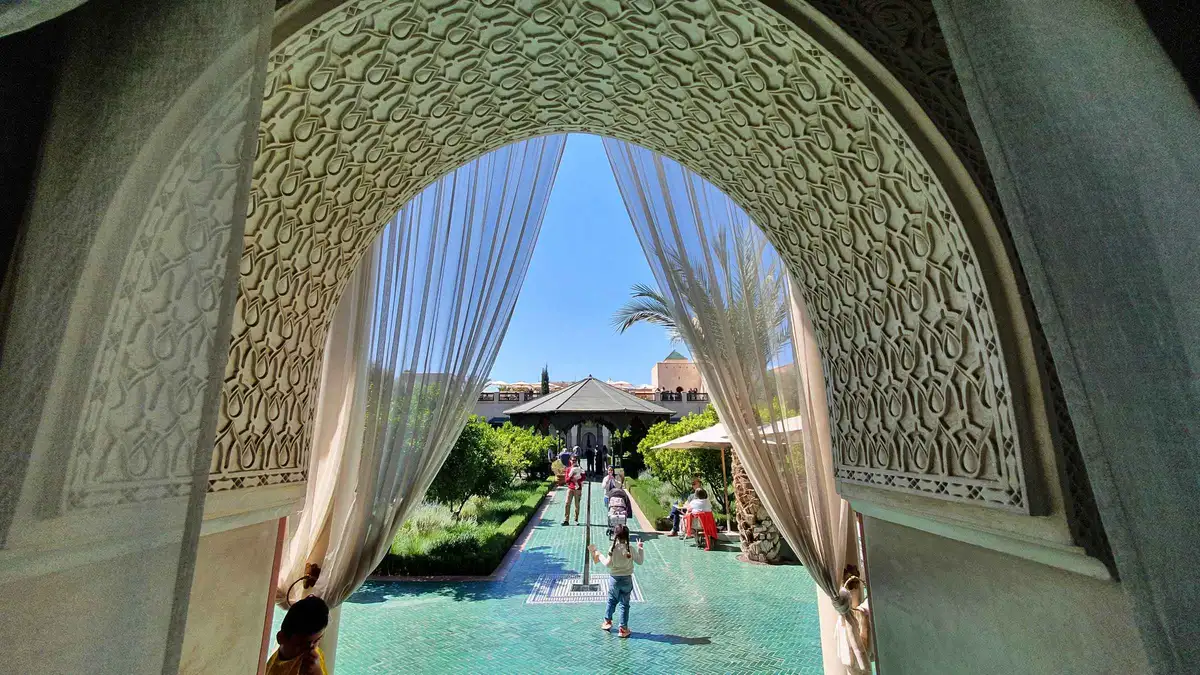 from $66.35
Marrakech: Tailor-Made City Tour With Your Own Private Guide
listed at $66.35
Half or full-day private tour built around what you ask to see, with pickup included. Up to two sights on the half-day and four on the full day; entrance fees are not included.
Check Availability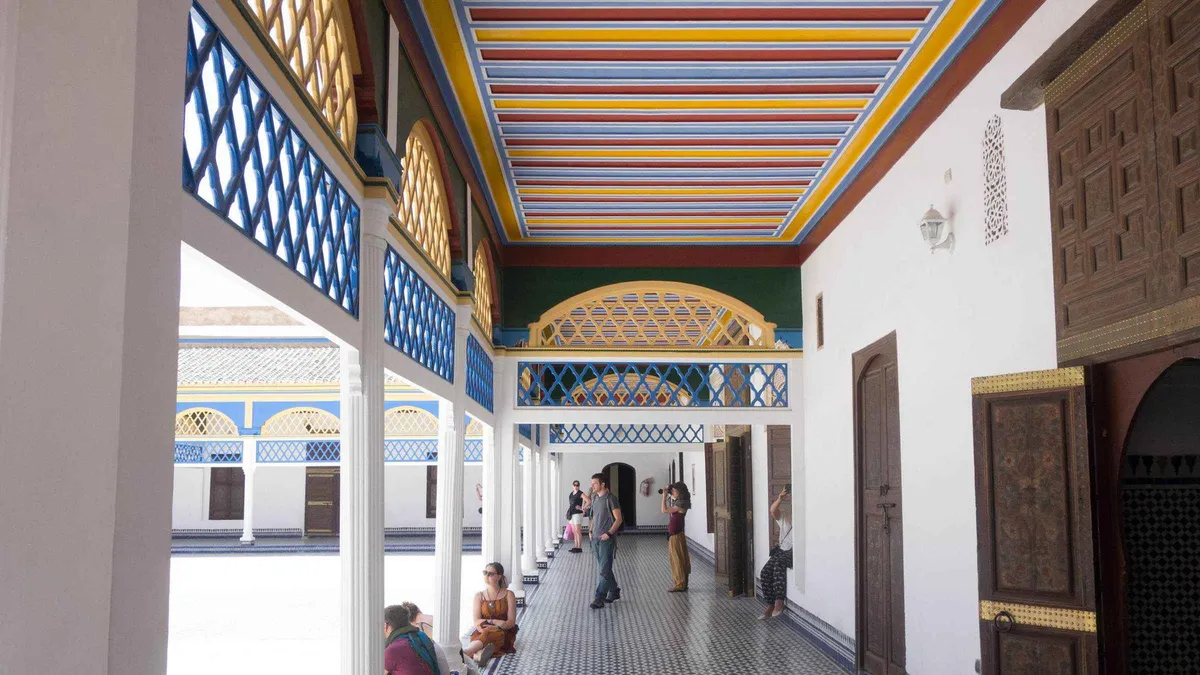 from $17.58
Marrakech: Bahia Palace, Madrasa Ben Youssef and Medina Tour
listed at $17.58
Four-hour guided walk through Bahia Palace, Madrasa Ben Youssef and the medina with a licensed guide. Entry is paid in cash at the door: 100 MAD for Bahia Palace and 50 MAD for the madrasa.
Check AvailabilityPrices, ratings and details are the platform's own, checked in Q3 2026; dollar figures are the listed prices — the platform bills in your account's currency.
What The Almoravid Koubba Is: A Washroom That Outlived Everything
The building had one job, and it is the reason it survived: nobody demolishes the plumbing when they knock down the mosque.
The Ministry of Culture describes it in a single line, as a twelfth-century structure that served as a pavilion for the ritual ablutions of worshippers. That is exactly what it was: a mida'a, the water building attached to a mosque, where worshippers washed before prayer. The mosque it served was the great mosque of Ali ibn Yusuf, the main mosque of the city at the time, and that mosque has been rebuilt so completely in later centuries that nothing of the original is left above ground.
The dome was built by Ali ibn Yusuf, the second Almoravid ruler, who came to the throne at twenty-three and had spent more of his life in Andalusia than in Morocco. The inscription running around the interior names him and gives the day, Wednesday the thirtieth of Rabi I, but the year is damaged and unreadable. Four readings are possible; scholars settle on 1 August 1117 or, more likely, 6 May 1125.
Nothing else standing in this city is that old.
That single fact is why the Koubba is worth a hundred dirhams for fifteen minutes. The Almohads took Marrakesh in 1147 and demolished what the Almoravids had built, which is why the Koutoubia, the kasbah and everything after it are Almohad or later. This washroom is the only Almoravid building in the city that escaped, and the vocabulary of every later monument here, the lobed arches, the muqarnas, the carved plaster, starts inside its dome.
The top result gets its dynasty wrong
Search for this monument and one of the commercial pages ranking above the museums will tell you it was built in the twelfth century by the Almohad dynasty and used as a mausoleum for Almohad rulers, by a sultan it calls the third ruler of that dynasty. Every part of that is wrong: it is Almoravid, not Almohad, it is an ablutions pavilion, not a mausoleum, and Ali ibn Yusuf was the second Almoravid ruler. The Almohads are the people who demolished his city.
We read that page in Q3 2026 alongside the museum record of the monument, which describes the same building correctly.
The ablutions description and the tariff are the Ministry of Culture's page for the Coupole Almoravides, read in Q3 2026; the founder, the inscription and the date debate are as recorded on the English Wikipedia article for the Almoravid Qubba and in the Museum With No Frontiers Discover Islamic Art record for the monument.
Why It Sits In A Pit Below The Street
You look down into this monument rather than up at it, and the reason is the most useful thing the site teaches about Marrakech.
Cities rise. Nine hundred years of rebuilding, rubble, ash and new pavement lifted the ground around the Ben Youssef mosque until more than half the building was buried under seven to eight metres of debris, with later structures built on top of it. What you see from the railing is the upper storey; the lower storey, with its horseshoe arches and the basin under the dome, is at the level the twelfth century walked on.
The building was not rediscovered until modern times. French scholars documented it in 1947 and the architectural historian Boris Maslow published notes on it the following year; the clearance and study that followed ran under Henri Terrasse and Jacques Meunié, with the excavation of the buried levels carried out in the early 1950s and the findings published later that decade. Their decision matters to the visit: they refrained from reconstruction and left the structure essentially as they found it, so the damage you see is real damage rather than restoration.
The excavation also uncovered the rest of the ablutions complex, which is why the enclosure is bigger than the dome. A series of latrines surrounds the pavilion; beside it stood a monumental fountain about 14.5 metres by 4.5, open to the street through three arches with a basin in each bay; and behind that is a barrel-vaulted cistern that fed both through bronze pipes. The water came from khettaras, the underground drainage galleries that made settlement here possible, and whose abandonment UNESCO lists among the threats to the medina today.
The burial depth, the 1947 documentation, Maslow's notes, the Terrasse and Meunie excavations and the fountain, latrine and cistern dimensions are as recorded on the English Wikipedia article for the Almoravid Qubba and in the Discover Islamic Art record; the khettara reference is UNESCO's statement on the Medina of Marrakesh.
What To Look At In Fifteen Minutes
The building is one room and you cannot get lost in it, so the whole visit is a question of what you notice. Four things, in the order they become visible.
The outside, from the railing. A rectangle in stone and brick with two storeys separated by a plain projecting band about five metres up. The lower storey opens through six arches, twin-lobed horseshoe arches on the long sides and a lobed arch on each short side. The upper storey carries sixteen arches of different shapes, pointed horseshoe, curvilinear and lobed, and is finished with stepped merlons.
Count the arch types before you go in: no two faces of this building are the same.
The dome from below. The brick cupola is decorated with interlaced blind arcades and chevrons arranged around a seven-pointed star, and the whole interior scheme gets richer the higher it goes, from an almost bare lower wall to a dense outpouring of carved palm, pine cone and acanthus forms overhead. The comparison the specialists reach for is the Great Mosque of Cordoba and the Bab al-Mardum mosque in Toledo, both older and both Andalusi, which is exactly the world the ruler who built it came from.
The four corner squinches. In the corners between the dome and the rectangular walls sit four miniature cupolas carved with muqarnas, the honeycomb vaulting that becomes standard in Moroccan architecture later. These are among the earliest muqarnas in Morocco, and one scholar reads the mix of Cordoban and eastern motifs as a deliberate claim to two caliphal legacies at once. They are small, high and easy to miss, which is why fifteen minutes is the floor rather than the average.
The inscription and the basin. The foundation inscription running around the interior is the oldest cursive inscription in North Africa, damaged enough that its year is lost, which is the whole reason the building's date is argued over. Below it, the basin under the dome is ringed by a shallow trench that drained spilled water. That trench is the point of the building: everything above it is decoration on a washroom.
Dimensions, the arch counts, the seven-pointed star, the muqarnas squinches, the Cordoba and Toledo comparison and the cursive inscription are from the Discover Islamic Art record for the Koubba and the English Wikipedia article for the Almoravid Qubba.
How Much Time To Give The Almoravid Koubba
The Ministry publishes no visit length for any monument it sells here, and for this one the honest answer is that it is short. These three routings are ours, and the third is the one we would take.
This is the smallest ticketed monument in the medina and the only one where the admission costs more per minute than anything else in the city. That is not an argument against it, but it does mean the visit should be planned as part of an hour rather than as a stop of its own. Set against the alternatives, a hundred dirhams buys 90 minutes at the palaces or a quarter of an hour here, and what you get for it is the one building older than everything else you will look at all week.
| Routing | What you get | What it skips | Door to door |
|---|---|---|---|
| The look | The exterior from the railing, the dome from below and the basin | The corner squinches, the inscription and the excavated fountain | About 15 minutes including the ticket |
| The proper visit | All of it, including the four muqarnas squinches, the inscription band and the fountain and cistern remains outside | Nothing that is open on the day | About 30 minutes |
| The northern medina hour | This, then the madrasa opposite at 50 MAD, in the order that makes the architecture legible | Nothing, if you start at 09:00 before the madrasa fills | About 90 minutes for both, walking time included |
The order matters more here than at any other pair of monuments in Marrakech. Seen first, the Koubba is a small carved room; seen after the madrasa it is an anticlimax. Seen first and then followed by the madrasa, the vocabulary you have just looked at in one dome appears again at ten times the scale, three hundred years later, and the second ticket becomes a much better one. The one-day plan puts them in that order.
Timings are ours; the Ministry states no visit length for this monument. The madrasa fare is the monument's own published tariff, set out on the madrasa ticket page.
Hours, The Hundred-Dirham Question And The Friday Rule
The state publishes four things about this monument and nothing else. Here is the whole of it, and what each silence means when you are standing at the door.
The Ministry's page gives 9h to 17h, the four-line tariff, free entry for persons with reduced mobility, and free entry for Moroccan nationals every Friday and on the first day of national and religious holidays. There is no closing day, no last-entry time, no Ramadan variation, no visit length and no accessibility statement, and the building is reached by steps, which is a real question that nobody official answers.
| What you want to know | What the Ministry publishes | What that means on the day |
|---|---|---|
| Daily hours | 9h to 17h | Arrive by 16:00; no last entry is stated, so do not test the final half hour |
| Closing day | Not stated | Plan on it being open, but do not cross the medina for this alone without checking at the door |
| Sold with the museum next door | No. It is listed as its own product | Ignore any page that tells you the Koubba comes with a museum ticket |
| Timed entry | No slot system exists | The ticket is for the day; a queue here is two people, not two hundred |
| Step-free access | Not stated | The monument sits several metres below the street and is reached by steps. Ask before you pay |
Why it costs the same as a palace
The tariff is national rather than per monument: 100 MAD for a foreign adult buys fifteen minutes here and ninety at a palace, because the Ministry prices the category, not the building. Moroccan nationals and residents pay 30 MAD and enter free on Fridays, which is the same two-tier rule that applies at every state monument in the city. It is the strongest argument for treating the Koubba as the second half of a northern-medina ticket rather than a stop you make alone, and the tickets hub sets it beside the other fares.
Hours, tariff, the free-entry rule and the absence of a combined museum ticket are from the Ministry of Culture page for the Coupole Almoravides, read in Q3 2026; the note that the platform lists only five Marrakech monuments is our own reading of that platform on the same day.
Why No Tour Sells This Monument
A negative finding, and a useful one when a search for tickets returns nothing but walking tours.
Across the tour platforms we track for this site, not one card is built around the Koubba. There is no entry ticket product, no skip-the-line product and no guided visit of the monument alone. The reason is arithmetic: a fifteen-minute stop cannot carry an operator's margin, and a group of fifteen does not fit under a dome measuring 7.35 by 5.45 metres.
What exists instead is the northern-medina walk, which passes the door on its way between the madrasa and the souks.
That leaves two sensible ways in. Buy the state ticket at the door and read this page in front of the building, which costs $10.65 (100 MAD) and nothing more. Or, if you want it explained, take a tailor-made private guide and name the Koubba as one of your stops, which is the one product on the market that lets you choose a monument this small.
A group circuit will walk you past it without going in.
The same absence explains the state of the information about it. With no operator writing product copy, the pages that rank are thin, and one of the top commercial results has the dynasty, the function and the ruler's place in it wrong. If you want the building explained by somebody who can be held to it, the northern medina walks with licensed guides are the realistic option, and Moroccan law requires a guide to carry an official badge and professional card and to show them on request.
Our own review of the GetYourGuide cards listed for Marrakech in Q3 2026: no product on the platform admits to the Coupole Almoravides. The guide licensing requirement is loi 05-12 on the profession of tourist guide.
Almoravid Koubba Map: The Door And What Is Beside It
The monument at the Ministry's own published coordinates, with the four sights inside a ten-minute walk. Walk times are our estimates from the straight-line distances, rounded up for medina lanes.
Koubba coordinates as published on the Ministry of Culture ticket page for the Coupole Almoravides; the other four from Wikidata, verified for this guide.
Next Stop From The Koubba
Walk minutes are our estimates from the GPS distances, rounded up for the lanes.
Ben Youssef Madrasa
Directly opposite, and the reason to do the Koubba first: the arches and carved plaster you have just looked at close up reappear across a courtyard three hundred years later. The fare is half, at 50 MAD, and it is sold by a different ministry on the madrasa's own site.
1 min walkMusee de Marrakech
The nineteenth-century Dar Menebhi palace, two minutes away and often described online as selling a joint ticket with the Koubba. It does not on the state platform, and the museum page sets out what is and is not published about its own admission.
2 min walkThe souks
The lanes south of the mosque are the working end of the medina's souks, free to walk and open on their own schedule. It is the natural way back towards the square once the northern monuments are done.
3 min walkAlmoravid Koubba Questions
How much does the Almoravid Koubba cost to enter?
A foreign adult pays $10.65 (100 MAD) and a foreign child of 7 to 13 pays $5.33 (50 MAD); a Moroccan or resident adult pays $3.20 (30 MAD) and a Moroccan or resident child $1.07 (10 MAD). Free entry is limited to persons with reduced mobility and to Moroccan nationals every Friday and on the first day of national and religious holidays. It is the same national grid the Ministry charges at the palaces, which is set out on the tickets hub.
Is the Almoravid Koubba really the oldest building in Marrakech?
Yes, as far as anything standing is concerned. Its foundation inscription names Ali ibn Yusuf and gives a day but not a legible year, and the readings settle on 1 August 1117 or, more likely, 6 May 1125. The Almohads took the city in 1147 and demolished the Almoravid buildings, so this washroom is the only Almoravid structure left in Marrakech and everything else you can visit is later.
How long do you need at the Almoravid Koubba?
The Ministry states no visit length. Fifteen minutes covers the exterior, the dome and the basin; thirty lets you find the four muqarnas corner cupolas, read the inscription band and walk the excavated fountain and cistern outside. It is the shortest ticketed visit in the medina, which is why we pair it with the madrasa opposite in the routings above.
Is the Almoravid Koubba included with the Musee de Marrakech ticket?
Not on the official platform. The Ministry of Culture lists the Coupole Almoravides as its own product with its own tariff, and the museum next door is a separate institution with a separate admission. Older guidebooks and several blogs still describe a joint ticket. If a combined ticket is being sold at the door on the day, treat that as a local arrangement rather than as the published rule, and check what you are handed before you pay.
Why is the Almoravid Koubba below street level?
Because the city rose around it. Nine hundred years of rebuilding and rubble buried more than half the structure under seven to eight metres of debris, with later buildings put up on top; it was documented by French scholars in 1947 and cleared in the excavations that followed in the early 1950s. The excavators deliberately left it unrestored, so what you look down into is the twelfth-century ground level and the damage is genuine.
Is the Almoravid Koubba worth 100 dirhams?
It is the most expensive quarter of an hour in Marrakech and still worth buying if you care why the city looks the way it does, because nothing else survives from the dynasty that founded it. If your budget is being rationed across monuments, it is the one to pair with the 50 MAD madrasa opposite rather than to visit alone, and free things to do covers what costs nothing in the same quarter.
Can you visit the Almoravid Koubba with a wheelchair?
Nobody official says, and the geometry is against it. The Ministry grants free entry to persons with reduced mobility and then publishes no access statement at all, while the monument sits several metres below the modern pavement and is reached by steps. Of ten Marrakech venues checked on their own sites, only two publish an accessibility statement. Ask at the door before paying, and see the practical planning pages for the wider picture.
The Koubba On Film: The Dome, The Squinches And The Pit
Three short passes that show what a photograph of the exterior cannot: the depth of the excavation and the carving overhead.
The Almoravid Koubba, Marrakesh: the oldest surviving building
The clearest run through the monument and its context, useful before deciding whether fifteen or thirty minutes is your routing.
Video: DJ ANGELMorning Tour of the Dome of Almoravid Koubba, Marrakech (4K)
Filmed early, which is when the light reaches the carved dome and the interior is not a silhouette.
Video: walkersAlmoravid Koubba, Marrakech
A short plain pass that shows how far below the street the monument sits and how the steps down work.
Video: travelessVideos load from YouTube only when you press play.
Reviewed Q3 2026 (July–September 2026); next review Q4 2026. Prices, hours and terms are set by the venue or operator and confirmed at checkout.
We may earn a commission if you book through one of our links, at no extra cost to you. Full affiliate disclosure