 Marrakech Guidebook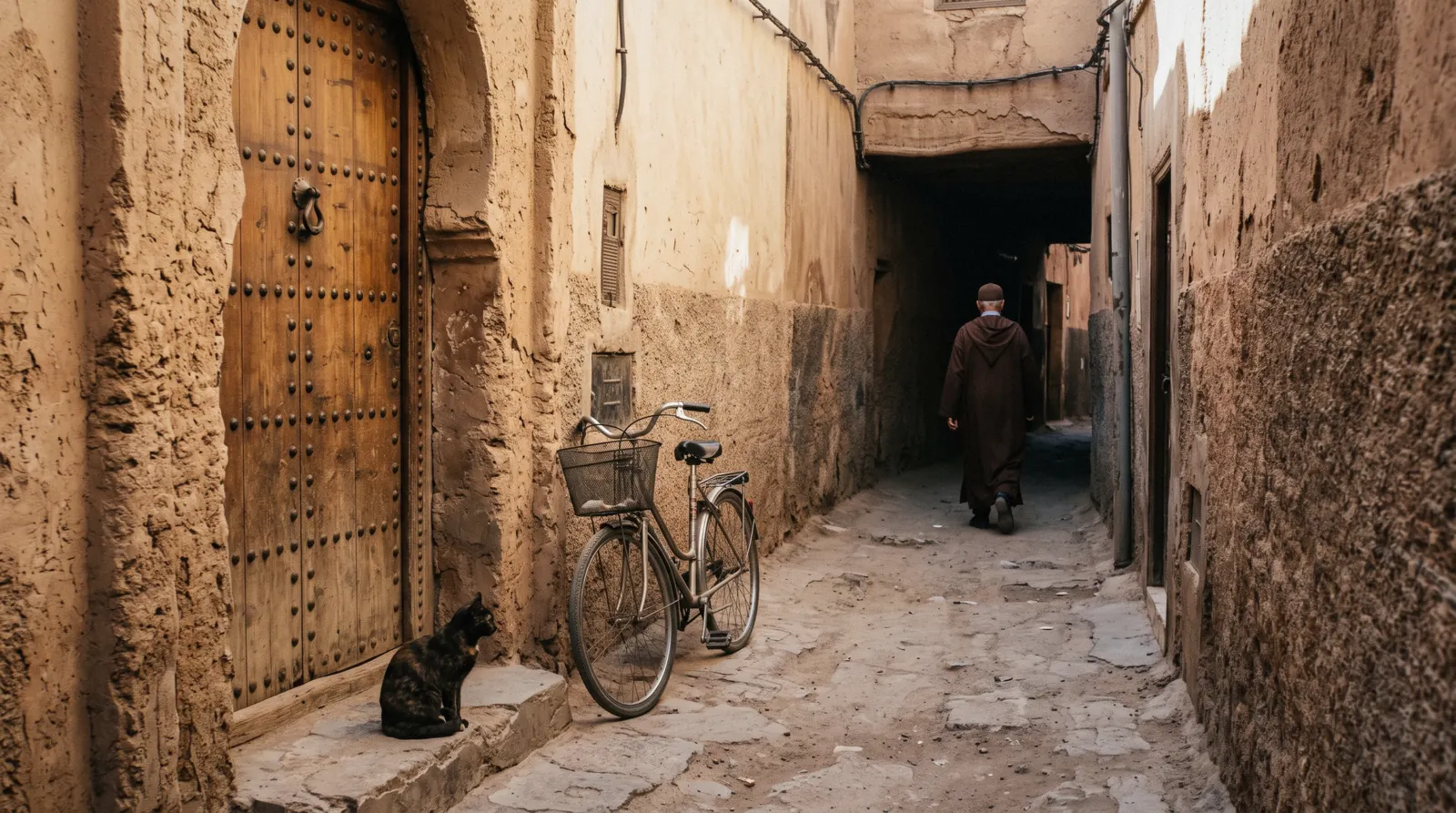
The Marrakech Medina
The Marrakech medina is the walled city, a UNESCO World Heritage property since 1985 and 1,107 hectares of it, and almost everything this site writes about stands inside it. The thing that makes it difficult to plan is also the thing that makes it worth staying in: it is a quarter people live in, not a monument that opens and closes. There is no admission and no boundary you can see from the ground apart from the ramparts themselves. This page sets out what the inscription actually covers, every ticketed door inside the walls with its hours and its international price, how addresses work when no vehicle can reach them, and what a night inside the walls buys you against a night outside. The Marrakech guide this page belongs to carries the ticket layer, the day plans and the districts around it.
Quick answer What it is, what is ticketed inside, how the addresses work
The Marrakech medina has been a UNESCO World Heritage property since 1985, list reference 331, and the inscribed property runs to 1,107 hectares of walled city that is still lived in rather than preserved. Walking into it costs nothing at any hour; the monuments, gardens and museums inside it are ticketed one by one, by four different authorities, and no combined city pass exists.
Key takeaways
- The four Ministry of Culture monuments inside the walls charge a foreign adult $10.65 (100 MAD) and a Moroccan national $3.20 (30 MAD) at the same door, and the tickets index sets out which shop sells which
- No car reaches most addresses in here, which is why a riad meets you on foot and carries your case the last stretch. Where to stay weighs that against a street address in the new town
- A four-hour licensed circuit of the monuments, souks and lanes is listed at $17.47 and is the cheapest way to fix the geography before you start walking it alone
- Jemaa el-Fna is the hinge the whole quarter turns on, and the souks run north from it into the streets that hold the workshops
Every Ticketed Door Inside the Walls
Hours and prices read from each institution's own ticketing page in Q3 2026, at the site rate of 1,000 MAD to $106.52. The price column is the international adult rate; Moroccan nationals and residents pay a published lower figure at the same door.
| Inside the walls | Hours | International adult | Closed | Whose tariff |
|---|---|---|---|---|
| Bahia Palace | 09:00 to 17:00 | $10.65 (100 MAD) | Not published | Ministry of Culture |
| El Badi Palace | 09:00 to 17:00 | $10.65 (100 MAD) | Not published | Ministry of Culture |
| Saadian Tombs | 09:00 to 17:00 | $10.65 (100 MAD) | Not published | Ministry of Culture |
| Almoravid Koubba, by the Ben Youssef mosque | 09:00 to 17:00 | $10.65 (100 MAD) | Not published | Ministry of Culture |
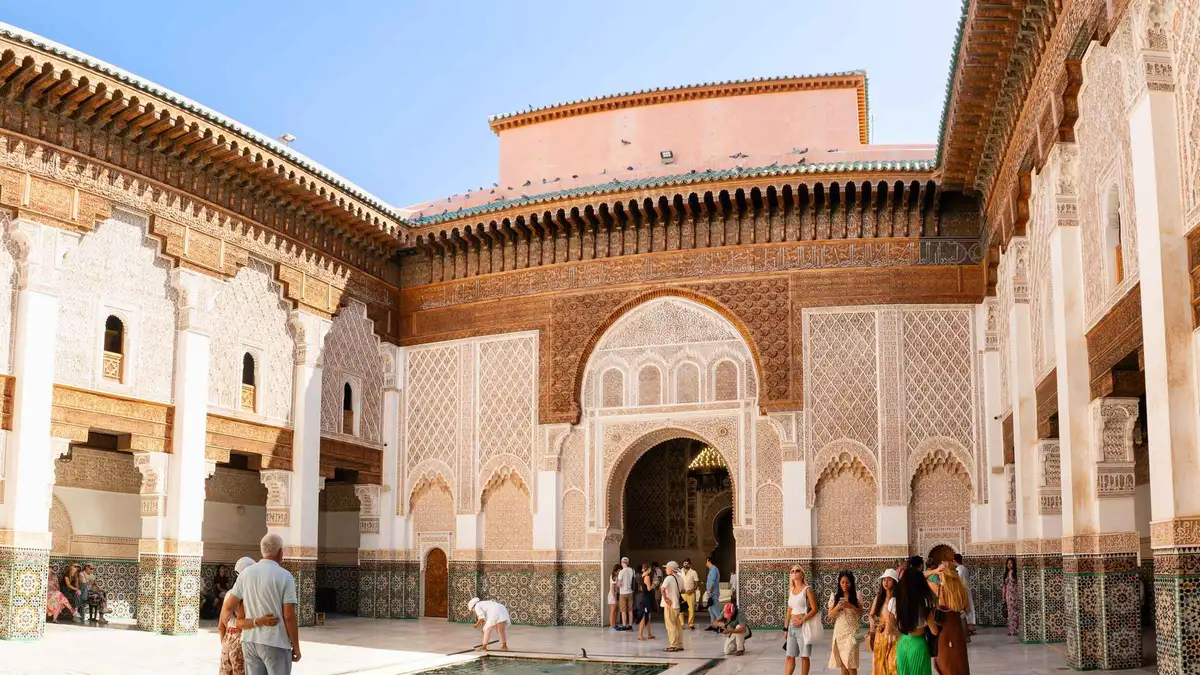
| Ben Youssef Madrasa | Daily 09:00 to 19:00, 09:00 to 16:30 in Ramadan | $5.33 (50 MAD) | No weekly closing day published | Ministry of Habous, its own shop |
| Le Jardin Secret | 09:30, closing 18:00 to 19:30 by season | $10.65 (100 MAD) | Published as open daily | Private foundation |
| Maison de la Photographie | Daily 09:30 to 19:00 | $8.52 (80 MAD) | Published as open daily | Private museum |
| Dar Si Said | Tuesday to Sunday 10:00 to 18:00 | $3.20 (30 MAD) | Mondays | Fondation Nationale des Musees |
| Musee de Marrakech, Place Ben Youssef | Not published | Not published | Not published | Foundation; its website does not resolve |
| Jemaa el-Fna, the souks, the ramparts | No published hours | Free | Never | No ticketing authority |
Four authorities, four shops, no city pass. The Musee de Marrakech is the one venue on this list for which no official price could be obtained at all: its own domain does not resolve and no ministry or foundation page carries its tariff, so we print nothing rather than a figure from a directory.
Guided Walks and Food Walks Inside the Walls
Every card links to the operator's own page, where the calendar shows what is still open for your dates. Prices are the listed USD figures read in Q3 2026, and monument entry is usually paid separately in cash at the door.
 from $17.47
Marrakech: Historical Monuments, Souks & Medina Guided Tour
listed at $17.47
Four-hour licensed-guide circuit of the medina monuments, souks and lanes, with a WhatsApp briefing the day before. Private option includes riad pickup; monument tickets are separate.
Check Availability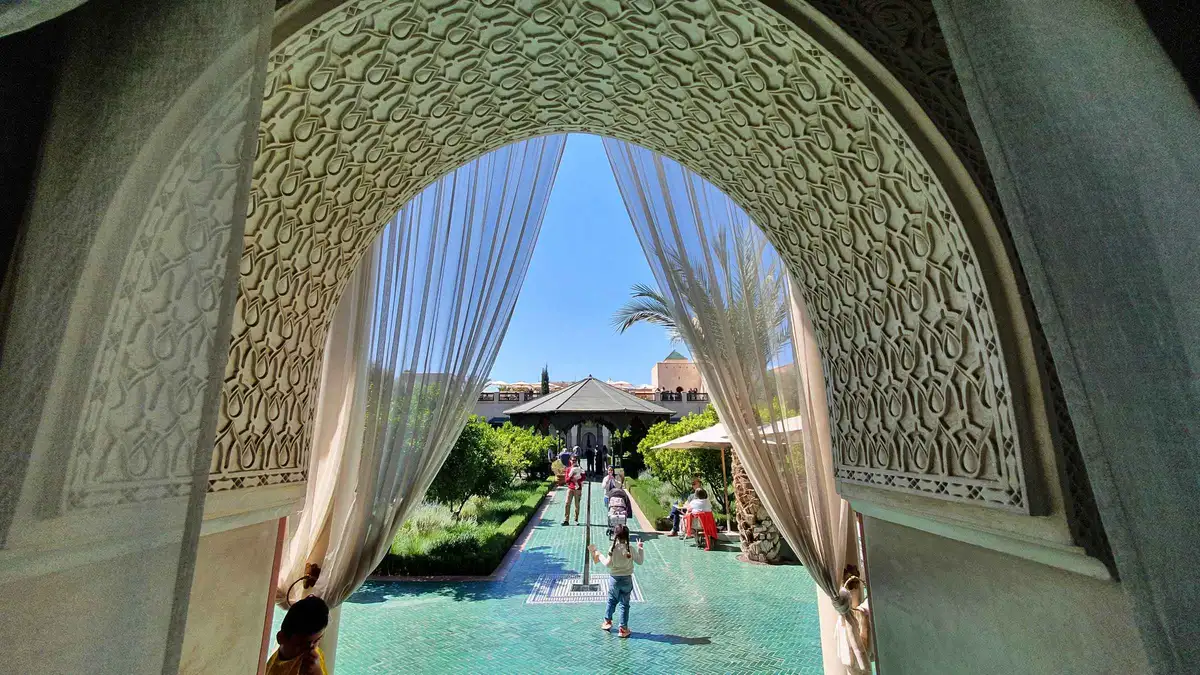 from $66.35
Marrakech: Tailor-Made City Tour With Your Own Private Guide
listed at $66.35
Half or full-day private tour built around what you ask to see, with pickup included. Up to two sights on the half-day and four on the full day; entrance fees are not included.
Check Availability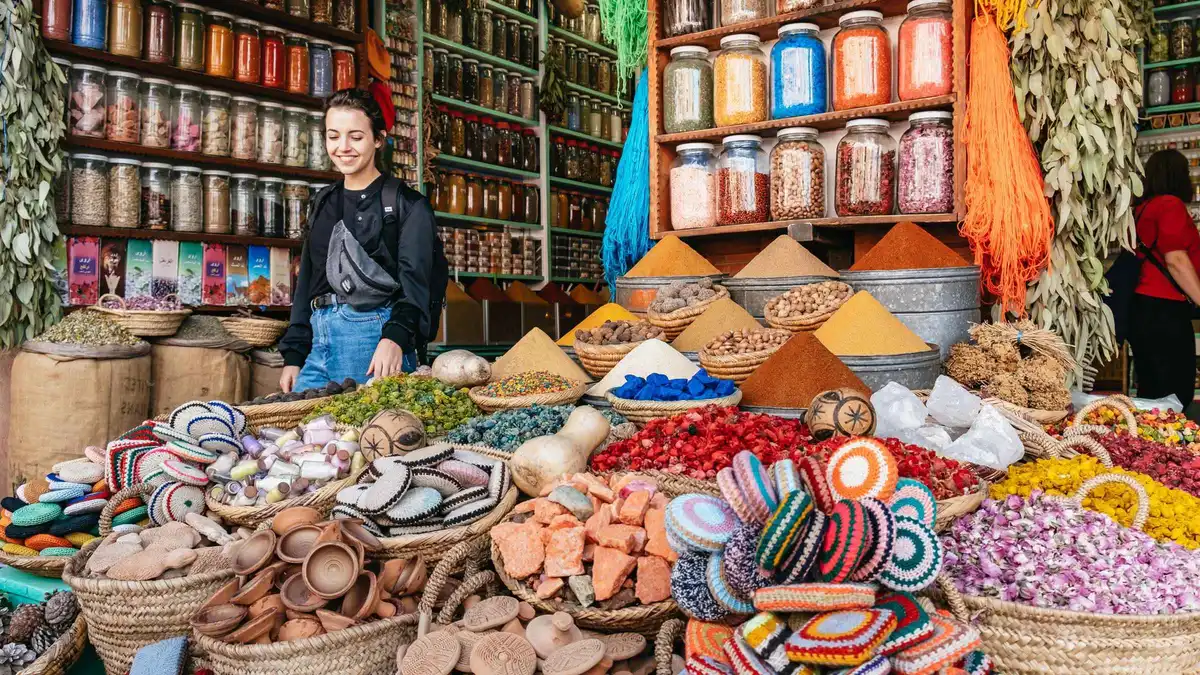 from $17.90
Marrakech: Colorful Medina Souks Guided Walking Tour
listed at $17.90
Three-hour guided walk through the dyers', metalworkers' and spice souks with a local guide. Sold as a shared small group or a private walk, pickup optional.
Check Availability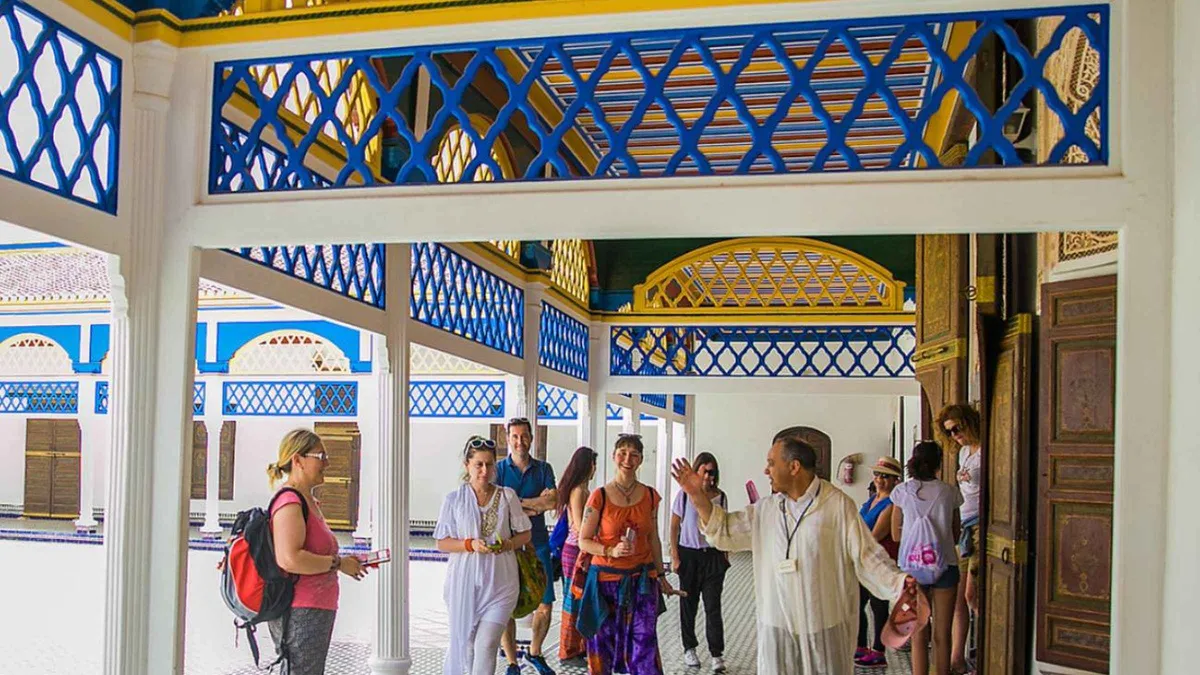 from $17.58
Marrakech: Bahia Palace, Saadian Tombs, Souk and Medina Tour
listed at $17.58
Four-hour licensed-guide walk covering Bahia Palace, the Saadian Tombs, the souks and the medina, with a WhatsApp reminder the day before. Monument tickets are paid in cash on site: 100 MAD per adult per monument, 30 MAD ages 7-13.
Check Availability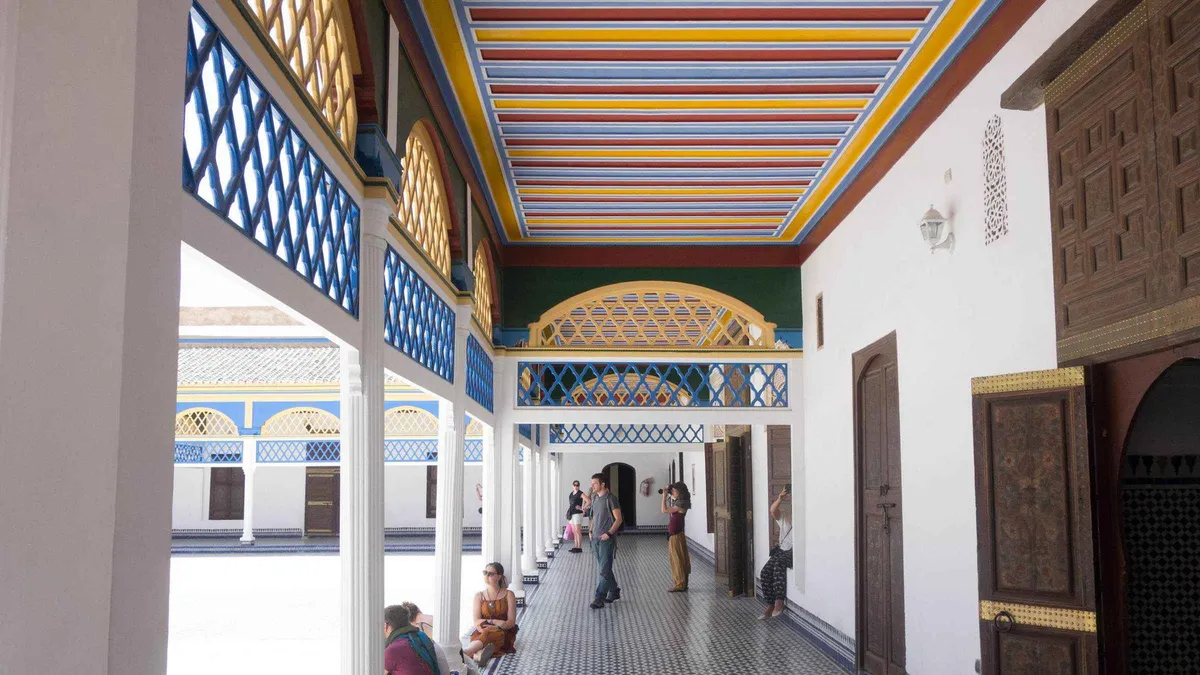 from $17.58
Marrakech: Bahia Palace, Madrasa Ben Youssef and Medina Tour
listed at $17.58
Four-hour guided walk through Bahia Palace, Madrasa Ben Youssef and the medina with a licensed guide. Entry is paid in cash at the door: 100 MAD for Bahia Palace and 50 MAD for the madrasa.
Check Availability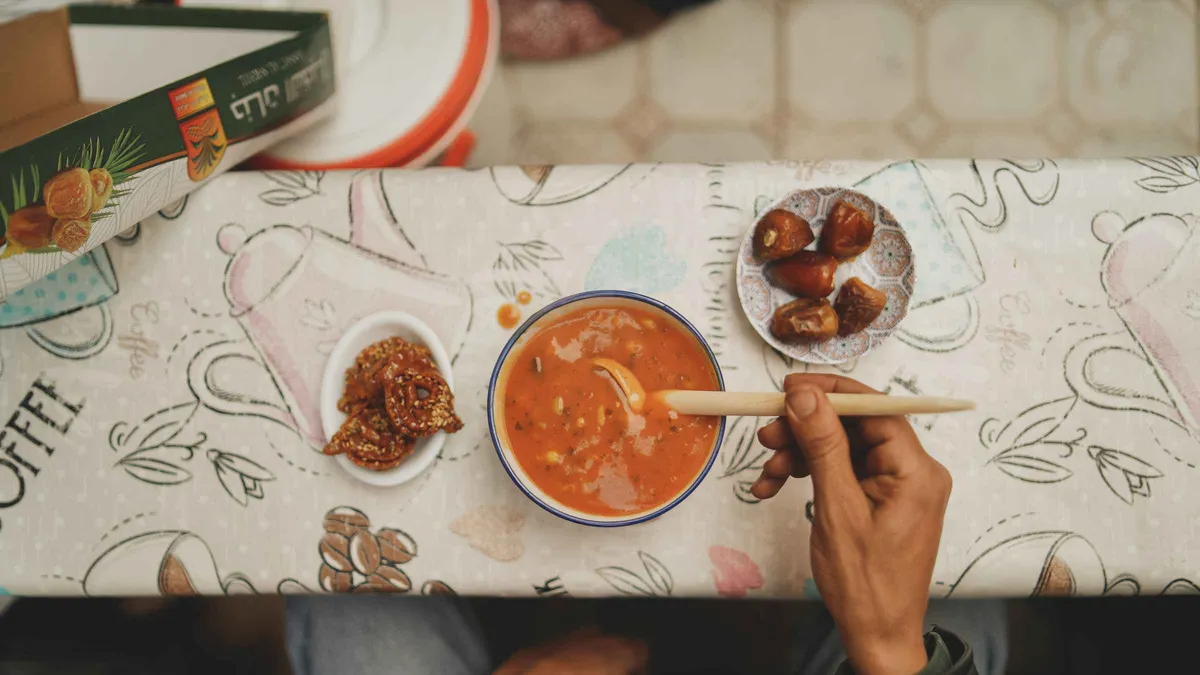 from $55.51
Marrakech: Medina Stories Food Tour with 15+ Tastings
listed at $55.51
Four-hour small-group medina food walk with more than fifteen tastings, run in English. The operator says it cannot cater for severe allergies or celiac diets because of cross-contamination at street stalls.
Check AvailabilityPrices, ratings and details are the platform's own, checked in Q3 2026; dollar figures are the listed prices — the platform bills in your account's currency.
What the Inscription Actually Covers
The medina is not listed for one building. It is listed as a working city, and the wording matters when you are standing in it.
Morocco nominated the medina in 1984 and the World Heritage Committee inscribed it in 1985 under four cultural criteria at once, numbers one, two, four and five. The inscribed property covers 1,107 hectares and its boundary, in the Committee's own language, is correctly defined by the original ramparts that enclose all the requisite architectural and urban attributes. That is the only line anyone can walk: if you are inside the walls, you are inside the property, and if you have crossed a gate outwards you are not.
The criterion that describes what you will actually see
Criterion five is the one worth carrying with you, because it describes the quarter rather than its monuments. In the 700 hectares of the Medina, it reads, the ancient habitat, rendered vulnerable due to demographic change, represents an outstanding example of a living historic town with its tangle of lanes, its houses, souks, fondouks, artisanal activities and traditional trades. Note the two figures in one property: 700 hectares is the historic habitat described in the evaluation, 1,107 hectares is the inscribed property.
Note also the word vulnerable, which is in the citation itself.
The rest of the citation, in one paragraph
The other three criteria are about influence rather than fabric. The Committee held that Marrakech possesses an impressive number of architectural and artistic masterpieces, each of which alone would justify inclusion; that as the capital of the Almoravids and the Almohads it played a decisive role in medieval urban planning, with Fez described as an adaptation of the older Marrakech model; and that the city is the textbook example of a large Islamic capital in the western world. The named ensemble includes the Koutoubia mosque, the Kasbah, the ramparts, the monumental gates and the gardens.
Who protects it, and what the Committee asked for
Protection runs through Morocco's heritage law, Law 22-80, together with an Architectural Charter of the Medina agreed by convention in 2008. When it inscribed the property the Committee recommended that the authorities avoid any breaching of the ramparts, protect the medina and especially the facades of its buildings and its gardens, and protect the surroundings, naming the palm grove, the Menara and the gardens of Bab Djedid. Read that list against what you see and you have the argument the city has been having with itself ever since.
UNESCO World Heritage Committee report of the ninth session and the ICOMOS evaluation for property 331, both read in Q3 2026 on the UNESCO listing for the Medina of Marrakesh. The property page itself refuses automated requests, so the archive documents were used instead.
Addresses, Derbs and the Door No Car Reaches
This is the practical fact that changes a trip, and it is the reason medina arrivals are organised differently from hotel arrivals anywhere else.
Inside the walls the unit of address is the derb, a named lane or dead-end alley, and the number on the door counts within the derb rather than along a street. There is no through route for a car to most of them. What that means in practice is that your riad will ask for a flight number, meet you at the nearest point a vehicle can stop, and walk in with your luggage.
If you have booked a transfer instead, the drop-off is that same point, not the door: the operators say so on their own listings, and a private transfer to a Marrakech address is quoted to the nearest vehicle access rather than to the riad itself.
The thing we will not do is describe the surface underfoot as if an authority had described it. No official Moroccan or UNESCO source states anything about paving, steps, gradients, cart traffic or motorbikes inside the medina. The only official characterisation of the terrain is the sentence in criterion five about a tangle of lanes.
Every other description in circulation, ours included, would be an impression. What is documented is the access rule above, and the fact that of ten Marrakech venues checked on their own sites only two publish an accessibility statement at all, neither of them inside these walls.
How to arrive without losing an hour
Land your first arrival in daylight if the choice is yours. Send the riad the exact arrival time and take the meeting point they name rather than an address you found yourself. Carry small notes for the porter.
If you are arriving late, the two honest options are a private transfer that includes the walk-in or a first night outside the walls; the airport route sets out both, including bus 19, which runs from 06:15 to 21:15 and puts you at the Koutoubia end of the medina rather than at your door.
Access and drop-off wording from the operators' own listings read in Q3 2026; the terrain finding is the negative one recorded in this site's accessibility research, where no official source on medina paving or gradients could be obtained.
What Stands Inside the Walls, in Walking Order
Distances are straight lines from Place Jemaa el-Fna, computed from the published coordinates, so the walked line is longer and inside the lanes it is longer again.
Start at the square and treat it as the centre of the compass. West of it is the Koutoubia, whose minaret stands 77 metres and is the one thing visible from most of the quarter, which makes it the landmark you steer home by. North of the square the souks begin and run for the better part of a kilometre into the workshop streets.
South and south-east is the monument belt: the palaces, the tombs and the museums, all within a twenty minute walk of each other. The table gives the straight-line distances that the lanes will lengthen.
| From Jemaa el-Fna | Straight line | What it is | Where it is written up |
|---|---|---|---|
| Koutoubia mosque and its gardens | 0.47 km | The 77 metre minaret, gardens free, interior closed to non-Muslims | The Koutoubia |
| Le Jardin Secret | 0.56 km | Two walled gardens and a tower, on Rue Mouassine | Le Jardin Secret |
| Dar Si Said | 0.60 km | The national weaving and carpet museum, closed Mondays | Dar Si Said |
| Almoravid Koubba | 0.65 km | The oldest surviving structure in the city, by the Ben Youssef mosque | The tickets index |
| Ben Youssef Madrasa | 0.73 km | The Quranic college, open to 19:00 on its own tariff | Ben Youssef |
| Maison de la Photographie | 0.80 km | Photographic archive with a rooftop, open daily | Maison de la Photographie |
| Bahia Palace | 0.86 km | The nineteenth century vizier's palace and its courtyards | Bahia Palace |
| El Badi Palace | 0.90 km | The Saadian ruin, storks on the walls, sunken gardens | El Badi |
| Saadian Tombs | 0.94 km | The burial chambers inside the Kasbah quarter | Saadian Tombs |
| The tanneries at Bab Debbagh | 1.32 km | Working workshops, no ticket, no published hours | Things to do |
A route that does not double back
Take the monuments in one southern loop and the souks in a separate northern one, because they are two different walks and mixing them is what turns a morning into a march. The southern loop starts at Bahia, drops to Dar Si Said two hundred and seventy metres away, then to El Badi and the Saadian Tombs, which stand three hundred metres apart in the Kasbah quarter, and comes back through the Mellah by the Place des Ferblantiers. The northern loop is Le Jardin Secret, the Ben Youssef Madrasa, the Almoravid Koubba and the souks, ending at the square.
Either loop is a morning at a Moroccan pace.
The two things inside the walls that are not buildings
The first is the square itself, which carries its own UNESCO listing on the intangible heritage list for the storytellers, musicians and food stalls rather than for anything built. The second is the market layer: the souks are streets, not an attraction with a gate, and no authority publishes their hours because none exist. Individual shops set their own, many close around Friday midday prayers, and the dyers' and metalworkers' lanes work to the rhythm of the trade rather than of visitors.
Coordinates from the institutions' own ticketing pages and from the verified Wikidata items, read in Q3 2026; distances computed from those coordinates. The minaret height and the ensemble list are UNESCO's.
One Wall, Four Tariff Authorities
The single most useful thing to understand before you buy anything inside the medina, and no English-language page states it plainly.
The monuments inside the walls do not share a tariff, an operator or a shop. Four separate authorities set the prices, and each sells its own tickets on its own platform. That is why there is no city pass, why the same palace can cost three different things depending on nationality and residence, and why a guided walk that says entry is not included is being honest rather than mean.
The table names each authority and what it controls inside the walls.
| Authority | What it sells inside the walls | International adult | Where it sells |
|---|---|---|---|
| Ministry of Culture | Bahia, El Badi, the Saadian Tombs, the Almoravid Koubba | $10.65 (100 MAD) each | Its own e-services platform, live since 2025 |
| Ministry of Habous | The Ben Youssef Madrasa alone | $5.33 (50 MAD) | The monument's own site, not the Ministry of Culture platform |
| Fondation Nationale des Musees | Dar Si Said | $3.20 (30 MAD) | At the door; the foundation's own ticket paths fail |
| Private foundations and museums | Le Jardin Secret, Maison de la Photographie | $10.65 (100 MAD) and $8.52 (80 MAD) | Each venue's own site or its door |
The two-tier rule, said plainly
At the four Ministry of Culture monuments a foreign adult pays 100 MAD where a Moroccan national or resident pays 30 MAD, and a foreign child of seven to thirteen pays 50 MAD against 10 MAD. On top of that, Moroccan nationals enter free every Friday and on the first day of national and religious holidays. Visitors do not, and no visitor discount exists to match it.
That is the published rule on the Ministry's own ticket pages rather than a rumour, and the Friday and holiday page works through what it does to a plan.
What a guided walk includes
Most medina walking tours quote a guide, not a gate. The listings say so: entry fees are typically paid in cash at each door, which on a Bahia and Ben Youssef morning means 150 MAD a head on top of the tour price. Two exceptions on this site are the standalone entry tickets, where the voucher itself is the ticket, such as the Saadian Tombs entry ticket sold with a postcard.
Read the inclusions line before you compare two prices.
Tariffs and the free-Friday wording from the Ministry of Culture ticketing platform and from the Medersa Ben Youssef and Fondation Nationale des Musees pages, all read in Q3 2026.
Gates, Taxis and Getting Out Again
The walls have working gates and the traffic stops at them, which is the whole logistics problem in one sentence.
Petits taxis, the beige cars, work inside the city limits and take up to three passengers, and the meter is compulsory: the obligation rests on a dahir of 1963 and was restated by ministry circulars in 2022 and again in 2024. What no authority publishes is the Marrakech figures themselves. The commune's transport section, its council decisions and the regional authority carry no tariff order, and the airport operator's site is behind a bot challenge, so this page prints no drop and no per-kilometre rate.
Ask for the meter, and take the next car if it does not go on.
Where a taxi can take you is to a gate, not to a door. Bab Doukkala on the north-west, Bab Agnaou at the Kasbah in the south and the kerb by the Koutoubia are the usual handover points, and every one of them is a walk of some minutes from wherever you are sleeping. Bus 19 from the airport passes the Arset El Bilk stop by the Koutoubia before it terminates in Gueliz, which makes it the one public route that puts you at the edge of the medina for $3.20 (30 MAD). Getting around covers the rest of the network, including the point that Marrakech has no tram and no metro at all.
The calèche question
The horse-drawn calèches rank at Place Foucauld beside the square and by the Koutoubia. The trade is regulated under a permanent municipal order of 1935, horses carry a branded number, a bracelet and a neck microchip, and the fleet faces three mandatory inspections a year run with SPANA and SOREC. What the commune does not publish is a tariff, so every figure quoted to you comes from the driver.
Agree the price and the route before you sit down; there is no posted municipal number to appeal to.
Meter obligation, operator handover and the calèche regime from the commune's own transport pages and the legal analysis cited in this site's transport research, read in Q3 2026. Bus 19 fare from the official Marrakech destination guide.
Sleeping Inside the Walls, and What the Law Now Calls It
The case for a riad, and the two rules that decide whether the one you are looking at is what it claims to be.
A riad is an inward-facing courtyard house: rooms on two or three floors around an open patio, stairs that are often steep and open on the courtyard side, and a roof terrace instead of a garden. The trade is simple. Inside the walls you wake up four minutes from the square, every monument on this page is a walk rather than a fare, and no traffic reaches you.
In exchange you give up the lift, the street number and the taxi that stops at the door. Most first visits of two or three nights belong in here; most weeks, most families with a pushchair and any trip with a mobility question are better served in Gueliz or Hivernage.
Two legal facts bear on what you book, and the where to stay hub works through both. Riad and kasbah are now classified accommodation categories in their own right on a star ladder, with a transition period that means a star advertised in 2026 is often not a reclassified one. And the tourist tax is charged per person per night on top of the room rate, with a statutory band of $1.60 to $3.20 (15 to 30 MAD) for a riad or guest house, children under twelve exempt, while the commune's own rate inside that band is not published anywhere we could reach.
Which part of the medina
The quarter is not uniform. The lanes immediately north and west of the square, around Mouassine and Dar el Bacha, put the souks and Le Jardin Secret on your doorstep and carry the most riad supply. The south-east, around the Bahia and the Place des Ferblantiers, is quieter and closer to the monument belt: that is the Mellah and its edges.
Further south again, inside the Kasbah, you are next to the Saadian Tombs and El Badi with a shorter evening than either. The hotel block below compares the three bands.
Classification categories from the joint ministerial order on accommodation standards and the tax bands from the local finance law, both cited in full on the where to stay page, read in Q3 2026.
Eating Inside the Walls, and Why This Page Names Almost Nothing
The honest position on medina restaurants, which is that the citable list everyone assumes exists does not.
There is no MICHELIN Guide restaurant selection anywhere in Morocco. Searching Marrakech on the Guide's own restaurant pages returns the message that there are no selected restaurants in the area, and Casablanca returns the same. No stars, no Bib Gourmands.
Marrakech appears in the Guide under hotels only. So a certificate on a medina door is not a distinction, and this page names no restaurant on a basis it cannot show you.
What is citable is the food itself. Couscous went onto the UNESCO intangible heritage list in 2020 with Morocco among the submitting states, and UNESCO's own description of the square covers the food stalls that set up in the eastern half of Jemaa el-Fna after dark. Beyond that we describe the type of place and the street: the stall rows on the square, the grill lanes off Rue Bab Agnaou, the bakeries in the residential derbs, the rooftop terraces around the souk edges. Where to eat sets out the whole food layer and a medina food walk with more than fifteen tastings is the guided version of it.
MICHELIN restaurant coverage checked on the Guide's own Morocco pages in Q3 2026; couscous inscription from the UNESCO intangible heritage list.
What Actually Goes Wrong Inside the Medina
Four things, all of them ordinary, and all of them cheaper to know than to learn.
Directions offered in the street are rarely free. The pattern British travel advice describes is people posing as official guides in the medina, and the fix is the same everywhere: decline politely, keep walking, and if you want a guide, book one whose licence you can see, such as a private guide by the half or full day. A licensed guide in Morocco holds a card under the guiding law, and a legitimate one will show it without being asked.
The second is cash. Card terminals are the exception in here: the souks, the food stalls and the taxis are cash trades, and the dirham is a closed currency that cannot be bought before you fly and may only be carried in and out to a limit of 2,000 MAD. Draw money before you go in and keep small notes for the porter, the stall and the calèche driver. What Marrakech costs sets out the money rules in full.
The third is the closing day nobody expects. Dar Si Said shuts on Mondays and the Ministry monuments publish no weekly closing day at all, which sounds convenient until a holiday falls on your only free morning. The fourth is heat: from June to August the average daily high runs above 36 degrees and the lanes hold it, so the medina is a morning and an evening city in summer and the middle of the day belongs to a courtyard. The best time to visit has the month by month figures.
Guiding law and the faux-guide pattern from the sources set out on safety and scams; currency rules from the Office des Changes, read in Q3 2026.
The Medina on the Map
Terracotta pins are the ticketed doors inside the walls, green pins are the free landmarks, and the distances quoted are straight lines from Place Jemaa el-Fna computed from the published coordinates.
Coordinates from the Ministry of Culture ticketing platform for its own monuments and from verified Wikidata items for the rest, read in Q3 2026.
Next Stop From the Medina
The royal quarter in the south
Two Ministry monuments and a free Almohad gate inside one short walk: the Kasbah.
1.08 km from the squareThe quarter beside the Bahia
The historic Jewish quarter, and the least documented address in the city: the Mellah.
A few minutes east of El BadiThe new town across the wall
Pavements, street numbers and a taxi that finds your door: Gueliz.
2.1 km westWhere to Sleep Inside the Walls
Three bands of the medina compared on what each one does for your day rather than on price. We publish no nightly rate band here: no rate reading was taken for a fixed date in Q3 2026, and an invented band would be worse than none, so each card opens a live search for your own dates.
North and west of the square
- Straight line to Jemaa el-Fna
- Most addresses under 0.8 km
- Suits
- A first visit, the souks on the doorstep, the largest choice of riads
Mouassine, Dar el Bacha and the lanes around them: Le Jardin Secret and the souks are minutes away and the square is a five minute walk. The busiest part of the quarter by day and the noisiest at the souk edges.
See stays in the north medinaThe south-east, by the Bahia
- Straight line to Jemaa el-Fna
- 0.86 km
- Suits
- The monument belt, quieter nights, cheaper riad rates
The Place des Ferblantiers end of the medina, with Bahia Palace, Dar Si Said and El Badi inside ten minutes on foot. Rooms here and in the Mellah are usually the cheapest inside the walls.
See stays in the Bahia sideThe Kasbah, inside the southern walls
- Straight line to Jemaa el-Fna
- 1.08 km
- Suits
- Early starts at the Saadian Tombs and El Badi, quiet evenings
The Almohad royal quarter, entered through Bab Agnaou, which is free and always open. Dinner options thin out south of the palaces after dark. The Kasbah guide sets out the trade.
See stays in the KasbahGueliz, the opposite trade
- Straight line to Jemaa el-Fna
- 2.09 km, about half an hour on foot
- Suits
- Late arrivals, lifts, longer stays, anyone who needs a car at the door
Outside the World Heritage boundary and outside the access problem: street numbers, pavements and the airport bus terminus. Every medina evening ends with a fare. The Gueliz guide.
See stays in GuelizAreas compared on the published coordinates and on the statutory tax bands read in Q3 2026. These links open a hotel search for that area, and we take a commission if you book through them, at no extra cost to you.
Marrakech Medina: Questions
What is the Marrakech medina?
It is the walled old city, inscribed on the UNESCO World Heritage list in 1985 as property 331, with an inscribed area of 1,107 hectares whose boundary is the original ramparts. It is a residential and working quarter rather than an open-air museum, which is why it has no gate, no hours and no admission. The monuments inside it are ticketed one by one, as the tickets index sets out.
Is it free to walk into the Marrakech medina?
Yes. There is no admission at any gate, at any hour, and no authority charges for entering the quarter. What costs money is what stands inside it: $10.65 (100 MAD) at each of the four Ministry of Culture monuments for a foreign adult, $5.33 (50 MAD) at the Ben Youssef Madrasa, $3.20 (30 MAD) at Dar Si Said.
Can a car reach a riad inside the medina?
Almost never. Addresses are counted along derbs, the named lanes, and most of them have no vehicle route at all. Riads meet arriving guests at the nearest point a car can stop and walk in with the luggage; transfer operators state the same limit on their own listings, which is why a private airport transfer is quoted to that point rather than to the door. The airport route covers the alternatives.
Is the Marrakech medina safe to walk around?
The recurring problem reported by travel advisories is not violence but unofficial guiding: people offering directions or a walk and then asking for payment. Decline and keep walking, book a guide whose licence you can see, and keep valuables out of sight in crowds. Cash is the other practical risk, because card terminals are rare inside the walls. Safety and scams goes through the pattern in detail.
How long do you need inside the walls?
Two full days covers the monument belt and the souks without marching: one southern loop from Bahia to the Saadian Tombs, one northern loop through Ben Youssef and the souks. Three days lets you add the museums and a hammam. Anything shorter than a full day means picking one loop and leaving the other, and the one-day itinerary makes that choice for you.
When is the medina quietest?
Before 09:00, when the monuments open and the workshops have not filled the lanes, and around Friday midday prayers, when many businesses shut for an hour or two. In summer the middle of the day empties itself: average daily highs run above 36 degrees from June to August and the lanes hold the heat, so the quarter works as a morning and evening city. The best time to visit has the monthly figures.
Do the souks inside the medina have opening hours?
No authority publishes any. The souks are public streets rather than a ticketed site, individual shops set their own hours, and many close around Friday midday prayers, but there is no official timetable to quote. Plan on late morning to early evening, with a second wave after dark near the square. The souks page covers the trades street by street.
The Marrakech Medina on Video
Three walk-throughs at street level, chosen because they show the lanes rather than a highlight reel: the daytime medina, the souk crossing, and the same streets before the shops open.
Marrakech medina walking tour 4k
A long walk through the lanes and the monument streets, which is what the quarter looks like at a normal pace.
Video: Discover With JoeMARRAKECH Walking Tour: Medina, Souks and Moroccan Charm
The crossing from the square into the souks, showing how quickly the streets narrow.
Video: Walk The TourMarrakech Medina Morning Walk, 4K Walking Tour
The same lanes before 09:00, which is the hour this page recommends for the monument loop.
Video: MARRAKECH POVVideos load from YouTube only when you press play.
Reviewed Q3 2026 (July–September 2026); next review Q4 2026. Prices, hours and terms are set by the venue or operator and confirmed at checkout.
We may earn a commission if you book through one of our links, at no extra cost to you. Full affiliate disclosure