 Marrakech Guidebook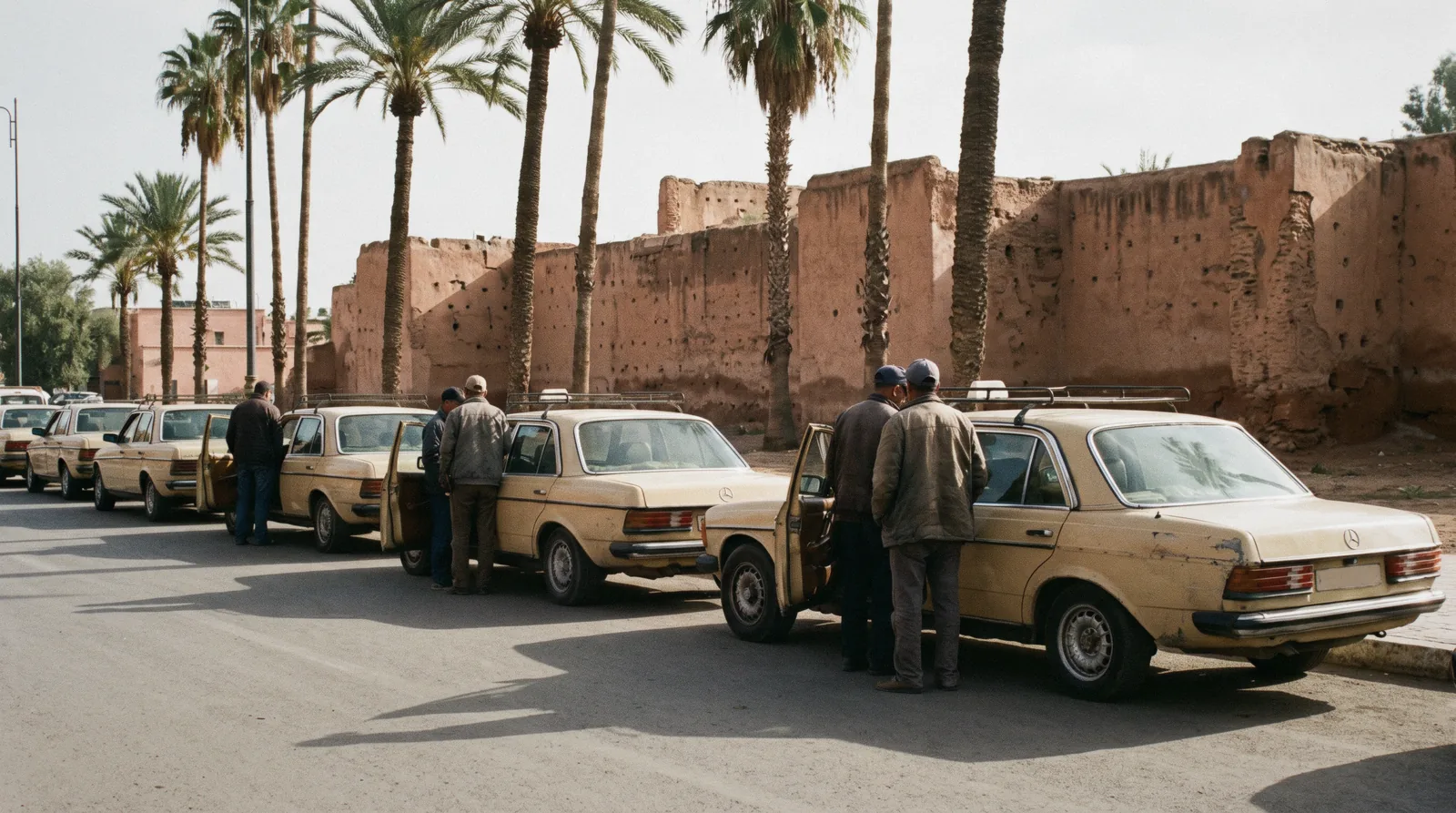
Getting Around Marrakech
Getting around Marrakech is a short list with a long footnote. There is no tram and no metro; the whole surface network is buses, beige petits taxis inside the city, shared grands taxis out of it, horse-drawn calèches for the ramparts loop, and your own feet, which do most of the work because almost everything in the medina sits inside a twenty-minute walk of Jemaa el-Fna. The footnote is that the fares are mostly unpublished. The meter is compulsory by law and no Marrakech authority prints the numbers it runs on; the bus network changed operator and no post-handover fare table has appeared; the calèches have been regulated since 1935 and have never had a published tariff. This page sets out what is actually documented, what is not, and what to do at the kerb when the difference matters. Everything checked in Q3 2026. Where this sits in a whole visit is set out on our Marrakech guide.
Quick answer Walk it, meter it, and forget the apps
Walk. Every monument on this guide's list except the Jardin Majorelle stands within a twenty-minute walk of Jemaa el-Fna, and the medina lanes admit no vehicle anyway. For everything else the lawful options are two: a beige petit taxi on its meter inside the city, and a shared grand taxi out of it. Morocco has no legal framework for ride-hailing, so the apps a visitor reaches for are either absent or unauthorised.
Key takeaways
- The meter is compulsory on every petit taxi journey under a dahir of 1963, restated by Ministry of the Interior circulars in 2022 and 2024, and no Marrakech authority publishes the rates it charges. What that means at the kerb is the most useful thing on this page.
- The city bus network changed operator, so every fare and timetable online predates the handover; the last officially published urban fare was $0.43 (4 MAD). The bus section shows what survived and what did not.
- Coming from the plane, the choice is a fixed-tariff rank taxi against a half-hourly bus; the airport route has the timetable and both conflicting official tariffs.
- If you would rather nobody drove at all, a private tuk-tuk circuit with an audio guide covers the wide streets in an hour, and a carriage ride paired with the Jardin Majorelle ticket takes the ramparts loop at a price agreed before you board.
The five ways to move, and where each fare comes from
Every mode of transport a visitor meets in Marrakech, with the legal position of its fare rather than a number we cannot source. Compiled from the Commune de Marrakech transport pages, the official destination guide and the jurist analysis of the taximeter obligation, all read in Q3 2026.
| Mode | What it is | Where the fare comes from | The catch |
|---|---|---|---|
| Petit taxi | Beige sedan, city limits only, three passengers maximum | A compulsory meter set by a local arrêté; the arrêté is not published | The meter is your only protection, so it has to be running |
| Grand taxi | Cream Mercedes-type sedan on a fixed route, six shared seats | Fixed administratively per route; no Marrakech table is published | It leaves when it is full, not at a time |
| City bus | Supratours since the handover, ALSA for the twenty-six years before | $0.43 (4 MAD) was the last published fare, under the old operator | Every fare and timetable online predates the change of hands |
| Calèche | Two horses and a driver, main rank at Place Foucauld | No tariff has ever been published, in ninety years of regulation | Agree the price and the route out loud before you climb in |
| On foot | The medina's actual transport system | Free, and the only way to reach most riad doors | Navigation, not distance, is what costs you the time |
There is no sixth row. Marrakech has no tram, no metro and no urban rail of any kind, and the high-speed line being extended south from Kenitra had not reached the city when we checked. The one thing this table cannot give you is a price list, because for four of the five rows no authority publishes one.
Start by working out how little you need to ride
Straight-line distances computed from each venue's own recorded coordinates, then converted to walking minutes at 1.3 times the straight line and 80 metres a minute, which is how every walk time on this site is produced. They are our arithmetic, not an official figure, and the medina's lanes bend more than the multiplier allows for.
Marrakech reads as a difficult city to move around and then turns out not to be, because the sights cluster. The four Ministry monuments, the madrasa, the souks and the square all sit inside walls about two kilometres across. Exactly three things pull you out of that circle: the Jardin Majorelle and the museum beside it, the modern quarter of Gueliz, and the airport.
Those are the rides.
| From Jemaa el-Fna | Straight line | On foot | Worth a taxi? |
|---|---|---|---|
| Koutoubia Mosque | 470 m | about 8 minutes | No, it is the walk out of the square |
| Le Jardin Secret | 560 m | about 9 minutes | No, straight up the Souk Semmarine spine |
| The souks | 650 m | about 10 minutes | No, and a vehicle could not follow you in |
| Ben Youssef Madrasa | 730 m | about 12 minutes | No, but allow for wrong turns |
| Bahia Palace | 860 m | about 14 minutes | No, though the last stretch is dull |
| El Badi Palace | 900 m | about 15 minutes | No, and it is five minutes on from the Tombs |
| Saadian Tombs | 940 m | about 15 minutes | No, pair it with El Badi in one go |
| The tanneries | 1,320 m | about 21 minutes | Only on the way back, and only if tired |
| Gueliz | 2,020 m | about 33 minutes | Yes, this is the first honest taxi ride |
| Jardin Majorelle | 2,170 m | about 35 minutes | Yes, and go early for the queue |
| Menara Gardens | 3,370 m | about 55 minutes | Yes, nobody walks this in summer |
| The Palmeraie | 7,150 m | about 116 minutes | Yes, or take the ride that includes it |
What the numbers do not tell you
A fifteen-minute figure inside the medina is a figure for somebody who does not stop and does not get lost, and you will do both. The lanes are unsigned and the map on your phone loses the thread under the covered souks. Budget half again on the first day and less than the table says by the third, once you have learned that Rue Riad Zitoun el Kedim runs from the square to the palaces.
Heat does the rest: in July and August the average daily high sits above 37°C, so from June to September you walk the medina before ten and after five and take a taxi in between. When to visit has the monthly figures.
The lanes that take no vehicle
Most riad addresses inside the medina cannot be reached by car at all: the derbs are too narrow for anything wider than a handcart. Riads therefore meet arriving guests at a named vehicle drop-off point and porter the luggage in. Ask the property for that point by name before you travel, and read where to stay for what it means when you choose between a medina riad and a Gueliz hotel.
The petit taxi and the meter nobody publishes
The beige cars are the workhorse of the city and the single most-argued-about part of a Marrakech trip. What follows is what is actually documented, which is less than you would expect and more useful than the figures circulating on blogs.
A petit taxi is licensed by the commune, works inside the city limits only, and carries a maximum of three passengers. It cannot take you to the Palmeraie hotels beyond the boundary or out to Agafay; that is the grand taxi's job. The colour is local: Marrakech's are beige, Casablanca's red, Tangier's blue, and the shade is how you tell a licensed car from a private one at fifty metres.
The meter is not optional. The obligation for second-category taxis to run a taximeter rests on the dahir of 12 November 1963 on the transport of persons by road vehicle, and the Ministry of the Interior restated it in circulars to regional governors in 2022 and again in 2024. Tariffs are not national: each city's pick-up charge, per-kilometre rate, minimum fare and night uplift are fixed by a local arrêté of the wali or governor.
Why this page prints no meter figures
We went looking for the Marrakech arrêté and it is not on the open web. The Commune de Marrakech website was crawled in Q3 2026: its Transport section, its Transport en commun section and its Décisions du Conseil index carry parking notices, road works and bus-station news and no tariff document of any kind. The wilaya publishes nothing and the ministry publishes the framework rather than the numbers.
So the figures you read elsewhere, a pick-up of around 7 dirhams, a working minimum of 15 to 20 dirhams, a 50 per cent night uplift, come from blogs and from each other. They may be roughly right. Nobody who could be held to them publishes them, which is why they are useless in an argument on a kerb. What is published is the rule that the meter must run.
What to do at the kerb
Open the front passenger door, say where you are going, and ask for the compteur before you sit down. If the meter is not switched on as the car pulls away, say so once; if nothing happens, get out while the car is still at the kerb. There will be another beige car within a minute anywhere a visitor goes.
Carry small notes, because a 200-dirham note for a short hop invites the no-change routine. Expect to share, too: petit taxis legally pick up additional passengers going the same way, and each passenger pays their own fare rather than splitting yours.
Legal basis and the enforcement circulars from the jurist analysis of the taximeter obligation at village-justice.com; the negative finding from crawling ville-marrakech.ma sections /transport/30/, /transport-en-commun/26/ and /decisions-du-conseil/76/, all in Q3 2026.
Grands taxis: the shared car that leaves when it is full
The cream sedans parked in ranks at the edge of the city are a different legal animal from the beige ones, and understanding the difference saves an argument.
A grand taxi is a first-category taxi under the 1963 dahir as amended, licensed by an agrément from a transport commission for a renewable seven-year term, with an authorisation card issued per vehicle. It runs a fixed route between towns or out to the suburbs, sells six seats separately, and departs when the sixth is taken. Fares per route are set administratively rather than by the driver, and no Marrakech route table is published anywhere we could reach.
You hire a whole car by paying for all six seats, which is called a course entière. That is also the honest way to think about the price: whatever a single seat costs, the car costs six times it, and any figure quoted for a private car should be checked against that arithmetic first.
Where they go from
Grands taxis do not cruise for fares. They leave from dedicated stations at the edges of the built-up area: the departure points cluster near the coach stations around Bab Doukkala and the newer El Azzouzia terminal, and Bab Rob handles the southern routes towards the mountains. No commune or wilaya publication lists the stands and their destinations, so the method is to name your destination at the rank and be pointed at the right line of cars.
For a visitor they matter in three situations: a day out to the Ourika Valley or Imlil done independently, a run to a Palmeraie hotel outside the city limits, and the leg from a coach terminal to an address across town. Otherwise a booked seat is cheaper per person than a whole car and removes the negotiation: an Ourika Valley day with a guide and lunch is priced per person and picks you up.
Category, agrément and seven-year licence term from the 1963 dahir as amended by law 16-99; the primary text at adala.justice.gov.ma refused connection in Q3 2026, so the framework is cited through the jurist analysis rather than the statute. Stand locations from the official destination guide; no official stand list exists.
The bus network changed hands, and nothing online has caught up
This is the fact that dates every other English-language page about Marrakech transport, and it is worth stating plainly because it changes how you should read any bus figure you find, including ours.
Supratours, the road arm of the national rail operator ONCF, took over the Marrakech urban and suburban bus network on 14 December 2025, ending twenty-six years of operation by the Spanish company ALSA. A new public management company for urban and peri-urban transport in the city was constituted shortly afterwards.
The consequences are unusually clean to verify. ALSA's own website lists four Moroccan cities and Marrakech is not among them; every Marrakech URL on it, the fare page included, returns a 404. The Commune de Marrakech still hosts its per-line timetable PDFs, and they are still headed HORAIRE BUS ALSA MARRAKECH, so even the one primary document on the network predates the handover. No post-handover fare table or line list had been published anywhere we could reach.
What is known, and how firmly
Set out as a table, because the reliability of each figure differs and that is the point.
| Item | Figure | How well sourced | How to use it |
|---|---|---|---|
| Standard urban fare | $0.43 (4 MAD) per journey | Official destination guide, ALSA era | Last published figure, not a confirmed current one |
| Airport line 19 | $3.20 (30 MAD) single, $5.33 (50 MAD) return | Destination guide and an airport information site | Carry the exact cash and expect to pay the driver |
| Line 19 timetable | Every 30 minutes, 06:15 to 21:15, all week | Commune de Marrakech timetable PDF, primary | The one firm document on the whole network |
| Ticket card | The rechargeable ikhlas card of the ALSA era | Operator page now a 404 | Survival under the new operator unconfirmed |
| Line list and hours | Not stated | No post-handover publication exists | Ask at the kerb rather than trusting a website |
Whether a visitor should bother
For one line only. Line 19 from the airport is a good deal against a rank taxi and runs to a printed clockface, and the airport page sets it against the taxi with both official tariffs. Beyond that, city buses serve the residential arrondissements rather than the visitor circuit, they run to timetables nobody currently publishes, and the two rides a visitor might want are a petit taxi hop of a few minutes each.
The exception is budget: the bus is roughly a tenth of a short taxi ride, and the kerbs by the Koutoubia and at Bab Doukkala are where the useful lines stop. Just do not plan a day around a departure time you found on a website.
Handover and the new management company from Moroccan economic press reporting; the ALSA 404s and the commune's line 19 PDF verified directly in Q3 2026. The 4 MAD urban fare is the official destination guide's figure and dates from the previous operator.
Why the ride-hailing app on your phone does not work here
This is the question visitors ask most often and the one where the answer is genuinely legal rather than commercial. Morocco has no framework for ride-hailing at all, and every app's position follows from that single fact.
Passenger transport for hire in Morocco is still governed by the dahir of 12 November 1963, under which the driver needs a taxi licence issued by the local authority. There is no separate category for a car dispatched by a smartphone application. The Ministry of Transport has been drafting one for years and nothing had been enacted when we checked, so an app dispatching its own drivers is dispatching unlicensed cars, and Ministry of the Interior circulars in 2022 and 2024 instructed regional governors to suppress exactly that.
| Service | Position in Morocco | What that means for you |
|---|---|---|
| Uber | Withdrew in 2018 in its own words, citing no clarity on how such apps fit the transport model | Not available to hail in Marrakech |
| Careem | Entered through a local company; its legality was challenged before the competition authority on the grounds its drivers hold no approval | Not an authorised service |
| inDrive | Operates outside the framework; drivers are not licensed taxis | Unauthorised, and the driver carries the risk |
| Bolt | Unauthorised | Same position as inDrive |
| Heetch | Lawful because it dispatches already-licensed taxis rather than running its own drivers | A booking layer over the regulated fleet |
The practical reading
The metered petit taxi and the licensed grand taxi are the only lawful options on the street. An app-hailed unlicensed car exposes the driver to seizure of the vehicle and leaves the passenger with no regulated recourse: no meter to appeal to, no licence number to complain about, no authority the complaint belongs to. If a pre-booked door-to-door car is what you want, the honest version is a booked transfer with a named operator and a price fixed in advance, which is what the airport transfer page covers.
The frustration visitors report is not the missing app; it is the loss of a fixed, agreed-in-advance price, and the answer to that is the meter.
Legal framework, the enforcement circulars and each operator's status from the jurist analysis of the taximeter obligation and app regulation in Morocco; Uber's withdrawal in the company's own words on its Morocco blog; the Careem proceedings from Moroccan press reporting on the Conseil de la Concurrence. All read in Q3 2026.
The calèches: regulated since 1935, never given a published price
The horse-drawn carriages at Place Foucauld are the most photographed transport in the city and the most misunderstood. They are heavily regulated, and none of that regulation covers what you pay.
The founding text is arrêté municipal permanent number 230 of 1935, which fixes the control regime for the city's calèches and their teams and is still the instrument cited for the trade. The welfare rules attached to it are specific in a way that surprises people: each horse carries a number branded on the left fore hoof, a bracelet on the left cannon and an electronic microchip at the neck, and the fleet undergoes three mandatory technical and veterinary inspections a year, run with SPANA, the Society for the Protection of Animals Abroad, and SOREC, the royal horse-breeding body. Daily checks cover the driver's permit, the carriage, the horse and the chip.
The city issued official uniforms to 148 drivers in 2019, and that is the count usually given for the licensed fleet.
- Main rank: Place Foucauld, immediately beside Jemaa el-Fna, with further ranks by the Koutoubia and at the larger hotels.
- Standard outing: the ramparts loop, out past the Bab Agnaou side of the kasbah and around the walls, roughly an hour.
- What is regulated: the horse, the carriage, the driver's permit, the inspections.
- What is not: the price, in ninety years of the arrêté's existence.
So what does it cost
Nobody official will tell you. No calèche tariff arrêté is posted on the commune's site, which we crawled in Q3 2026, and no tariff document was reachable anywhere else. Every price quoted, and they cluster in a wide band that rises after dark, comes from drivers and operators rather than from the city, so there is no posted municipal figure to appeal to mid-ride.
Agree the price, the route and the duration out loud before anybody climbs in, and repeat the number back. Decide in advance whether you are paying per carriage or per person, because that ambiguity is where the disputes live. If you would rather the number were fixed by a booking than a conversation, a carriage ride bundled with the Jardin Majorelle ticket prices both in advance.
The welfare question, answered honestly
Visitors ask whether to ride at all. The documented position is that this is one of the more closely supervised working-equine fleets in the region. It is also true that the horses work in a city where summer highs approach 40°C, that supervision is not a guarantee, and that nothing obliges you to ride.
Look at the animal in front of you before you agree anything, and walk to the next carriage in the line if it is not well kept.
Arrêté municipal permanent number 230 of 1935, the identification regime and the three annual inspections from Moroccan press reporting on the microchipping programme; the 148 uniformed drivers from Le Matin; SPANA's veterinary activities from its own Moroccan site. The absence of a tariff is our own crawl of the commune's transport and council-decision sections in Q3 2026.
Trains, coaches and the routes out of the city
Marrakech is the southern terminus of the national rail network, which decides how you leave as much as how you arrive, and the geography catches people out.
The station sits on Avenue Hassan II in Gueliz, roughly fifteen minutes on foot from the modern quarter's central streets. Trains run north to Casablanca, Rabat, Tangier and Fez. There is no railway south of Marrakech at all: Agadir and Essaouira are reached by Supratours coaches connecting at the station, and the high-speed line being extended from Kenitra had not reached the city when we checked.
We could not read a single ONCF page during this research. The operator's own site refused connection and its booking domain answered with a certificate chain that would not verify, so no fare and no timetable on this page comes from the railway itself, and none is printed here as though it did.
Which is why the desert is not a day trip
The only Merzouga itinerary the national operator will sell is a train and overnight coach combination running more than fifteen hours and arriving at six the following morning, and the main private coach network does not serve Merzouga at all. The Merzouga desert page shows the realistic three-day version, and the day trips hub sorts the places that fit a day from the places that do not.
Station location and network shape recorded in the transport research bundle; ONCF's own pages were unreachable in Q3 2026, so no railway figure is published on this page.
What a day of moving around actually costs
Pulling the fares together into one place, with the sourcing quality attached to each, because on this subject the confidence level matters as much as the number. Dollar figures are converted at the site's stated rate.
Transport is the cheapest line in a Marrakech budget and the one you can least accurately predict. A visitor staying inside the walls may spend nothing at all on two days out of three; a visitor based in Gueliz or the Palmeraie is taking two or three short taxi rides a day. Both are small numbers against the entry money, which runs to $78.80 (740 MAD) for one adult to do the full city list at the international tariff.
| Journey | What it costs | Source quality |
|---|---|---|
| Anything inside the medina | Free, and often the only option | Our own distance arithmetic |
| City bus, one journey | $0.43 (4 MAD) | Last published fare, previous operator |
| Bus 19, airport to Gueliz | $3.20 (30 MAD) single, $5.33 (50 MAD) return | Destination guide, not the airport operator |
| Petit taxi, medina to Gueliz | Metered; no published rate exists | No authority publishes the tariff |
| Airport rank taxi | $10.65 to $17.04 (100 to 160 MAD) by zone | Prefectural decision, via press reporting |
| Calèche, ramparts loop | Agreed with the driver, unpublished | No tariff arrêté has ever been posted |
Where the money actually goes
Not on transport. The lines that move a Marrakech budget are the bed, the entries and the day trips, and what Marrakech costs sets out all three. The one transport decision with real money attached is whether you hire a car, and for a city stay the answer is no: the medina admits none and every day trip in this guide is a booked seat that costs less than the fuel.
Rides that price themselves in advance
Where the meter and the calèche negotiation are the friction, a booked seat removes both: the price is fixed before you travel and the pick-up is a named point rather than a kerb. Prices are as listed by the operator and were read in Q3 2026; every card links to the operator's own page, where the calendar shows what is still open on your dates.
 from $16
Tuk Tuk Marrakech Private Tour: Audio guide, Gift & Pastries
listed at $16
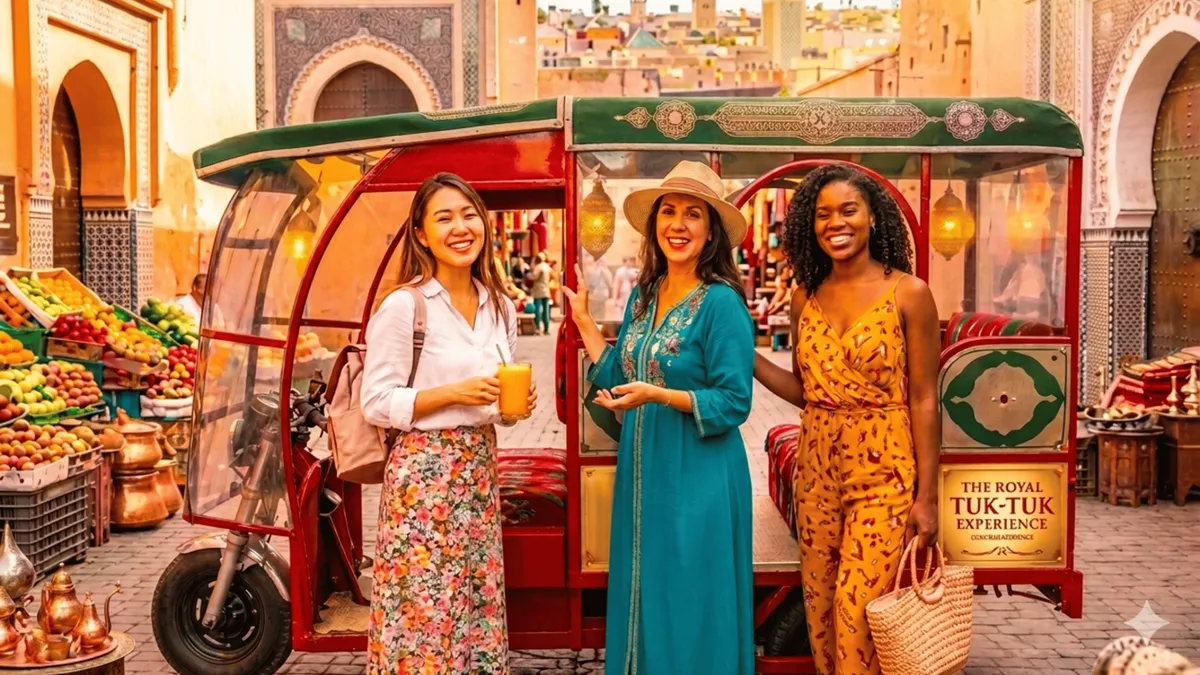
One to three-hour private tuk-tuk circuit with an audio guide, pastries and a gift; a driver, not a guide, is provided. Monument tickets are not included and Majorelle tickets have to be bought online first.
Check Availability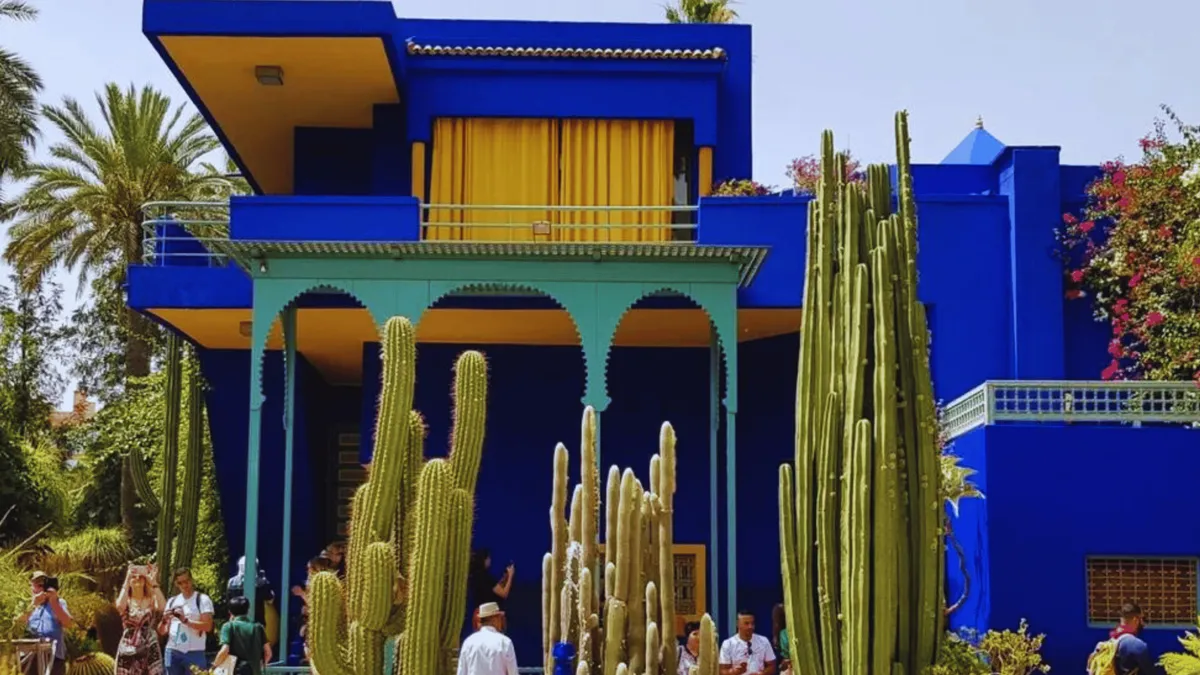 from $70.55
Marrakech: Majorelle Garden ticket & carriage ride
listed at $70.55
Three-and-a-half-hour outing pairing a Jardin Majorelle ticket with a horse-drawn caleche ride around the ramparts and gardens. The garden ticket is handed over during the tour, not with the voucher.
Check Availability from $8.29
Marrakech: Private Transfer to/from RAK Menara Airport
listed at $8.29
Private transfer between Menara airport and your Marrakech address, about 20 minutes. Vehicles cannot enter parts of the medina, so the drop-off can leave a 5-10 minute walk with luggage.
Check Availability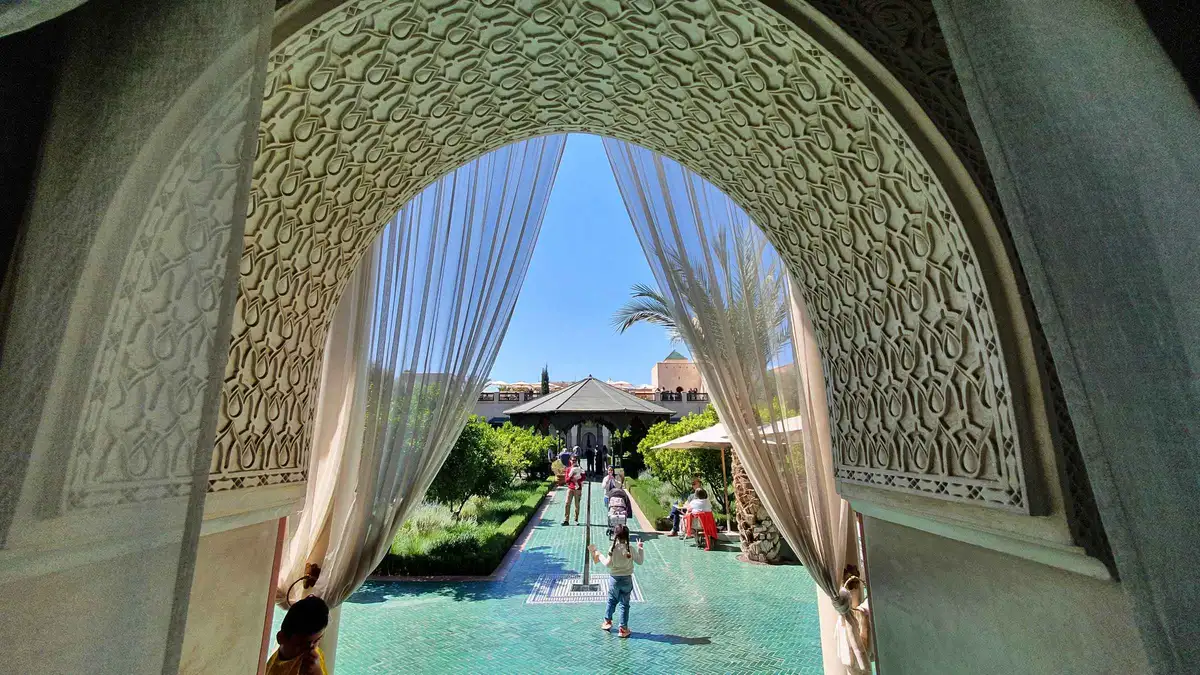 from $66.35
Marrakech: Tailor-Made City Tour With Your Own Private Guide
listed at $66.35
Half or full-day private tour built around what you ask to see, with pickup included. Up to two sights on the half-day and four on the full day; entrance fees are not included.
Check Availability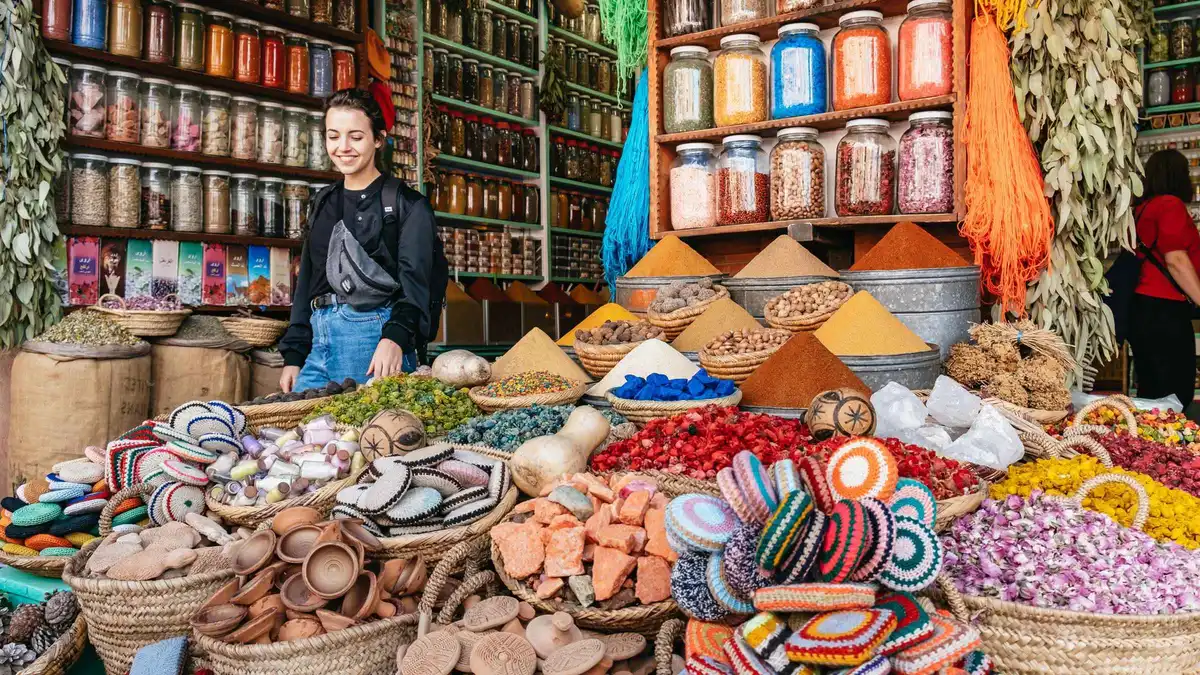 from $17.90
Marrakech: Colorful Medina Souks Guided Walking Tour
listed at $17.90
Three-hour guided walk through the dyers', metalworkers' and spice souks with a local guide. Sold as a shared small group or a private walk, pickup optional.
Check Availability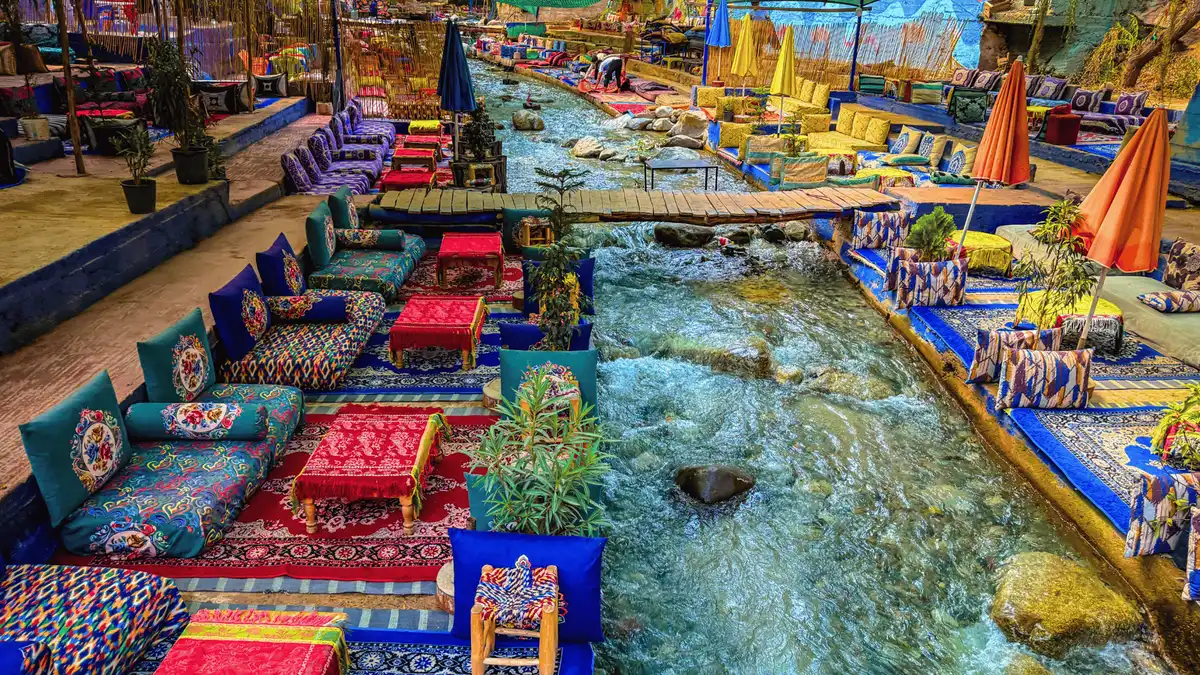 from $17.80
Marrakesh: Ourika Waterfalls, Atlas Mountains, Guide + Lunch
listed at $17.80
Seven-hour trip to the Ourika waterfalls and the Atlas foothills with a guide and lunch, pickup details sent by WhatsApp the evening before. Counting transport, plan on seven to eight hours door to door.
Check Availability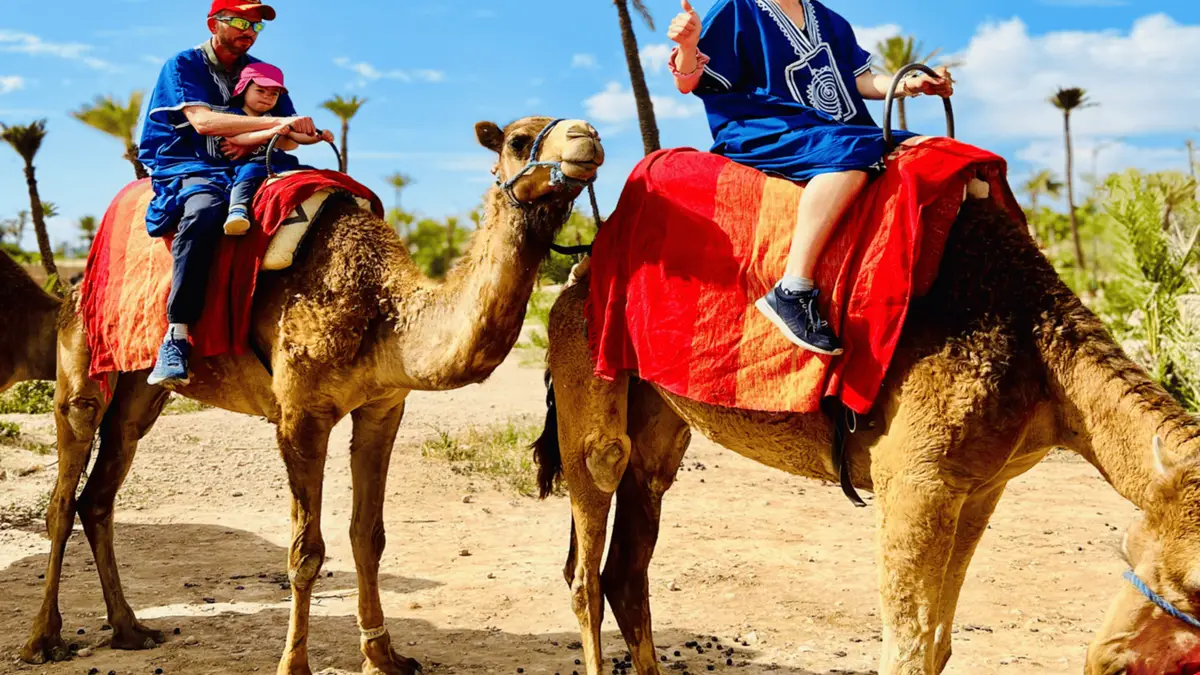 from $21.01
Marrakech: Camel Ride in the Oasis Palmeraie
listed at $21.01
Two-hour camel ride through the Palmeraie palm groves on the edge of town, with hotel pickup and a tea stop. The operator confirms the pickup time the evening before.
Check AvailabilityPrices, ratings and details are the platform's own, checked in Q3 2026; dollar figures are the listed prices — the platform bills in your account's currency.
Where the ranks, stands and stations actually are
The transport points a visitor uses, plotted from the recorded coordinates of each place. The calèche rank at Place Foucauld and the taxi ranks around Jemaa el-Fna are the two you will use most; the railway station and the airport sit on the far side of the modern city.
Coordinates from each venue's own record or its verified Wikidata item; walk times are our arithmetic from the straight-line distances, not an official figure.
The pages this one hands off to
Four decisions that start with transport and end somewhere else on this guide.
Marrakech airport to the city
The half-hourly bus against the rank taxi, both conflicting official tariffs, and the prepaid desk in arrivals. Getting in from the airport is the first transport decision of the trip.
The one ride everybody takesWhat Marrakech costs
The entry money, the tourist tax nobody publishes, the closed-currency rules and the cash machines. What Marrakech costs puts the fares on this page into proportion.
Where the budget actually goesWhere to stay in Marrakech
A medina riad means arriving on foot and walking everywhere; Gueliz means a taxi each way and a quieter night. Where to stay sets the two against each other.
The address decides the walkingSafety and scams
Unofficial guides, the fare disputes and what the official travel advice actually says, as opposed to what blogs attribute to it. Safety and scams covers the transport ones too.
The kerb-side argumentsGetting around Marrakech: the questions
Is there Uber in Marrakech?
No. Uber suspended its Moroccan operations in 2018, saying in its own words that it had received no clarity on how such applications could fit the existing transport model, and it has not returned. Morocco still has no legal framework for ride-hailing, so inDrive and Bolt operate outside it and Careem's legality was challenged before the competition authority. Heetch is the exception because it dispatches already-licensed taxis. The full position by operator is above; the lawful street options are the metered petit taxi and the licensed grand taxi.
How much is a petit taxi in Marrakech?
Whatever the meter says, and no authority publishes the rate it runs on. We crawled the commune's transport and council-decision sections and found parking and bus-station news only. The meter itself is compulsory under a dahir of 1963, restated by Ministry of the Interior circulars in 2022 and 2024, so a driver quoting a flat price is in breach of the rule rather than offering an alternative. What to do at the kerb explains how to hold to that; the airport rank is the one journey with a fixed published tariff.
Do I need public transport in Marrakech at all?
Mostly no. Every monument on this guide's list except the Jardin Majorelle sits within about a twenty-minute walk of Jemaa el-Fna, and the medina lanes take no vehicle. The distance table gives the figures. The rides worth taking are the airport run, the hop out to Gueliz, the Jardin Majorelle at about 35 minutes on foot, and the Menara Gardens at about 55 minutes, which nobody walks between June and September.
Who runs the buses in Marrakech now?
Supratours, the road arm of the national rail operator ONCF, which took over the urban and suburban network on 14 December 2025 after twenty-six years of ALSA. Every fare and timetable circulating online predates that handover, including the commune's own line 19 PDF, still headed with the previous operator's name. The last officially published urban fare was $0.43 (4 MAD). The bus section sets out what survived, and the airport line is covered on the airport page.
How much does a calèche ride cost in Marrakech?
There is no published figure and there never has been. The trade has been regulated since arrêté municipal permanent number 230 of 1935, which covers the horses, the carriages and the drivers' permits, but no tariff document is posted anywhere. Every price quoted comes from operators rather than the city, so agree the price, the route and whether it is per carriage or per person before anybody boards. The calèche section has the detail, or a carriage ride booked with a Jardin Majorelle ticket fixes the number in advance.
Can a taxi take me to my riad door in the medina?
Usually not, and this is the arrival that catches first-timers. Most riad addresses sit on derbs too narrow for a car, which is why properties meet guests at a named drop-off point and porter the luggage in. Ask your riad for that point by name before you travel. Where to stay compares it against a Gueliz hotel where the taxi reaches the door.
What is the difference between a petit taxi and a grand taxi?
Legal category, colour and range. The beige petit taxi is a second-category taxi licensed by the commune, works inside the city limits only, carries three passengers and must run its meter. The cream grand taxi is a first-category taxi licensed by agrément for a renewable seven-year term, runs fixed routes out of the city with six seats sold separately, and leaves when it is full. The grand taxi section explains the course entière, which is how you hire the whole car.
Marrakech Transport, Filmed at Street Level
Three walk-throughs that show the things a table cannot: what the medina lanes are actually like to move through, how the kerb-side exchanges go, and what a first arrival feels like before you have learned the geography.
MARRAKECH: Things to know as a first-time visitor to Morocco
The practical orientation a first-timer needs, including the taxi and medina navigation this page describes.
Video: Finding Gina Marie – Travel the World7 Things to Know BEFORE Visiting Marrakech
A short brief on the city's habits, useful for the kerb-side exchanges the meter section covers.
Video: Jake BraymillerWhat You NEED TO KNOW Before Visiting MARRAKECH!
Street-level footage of the medina and the square, which is the best answer to how far things really are on foot.
Video: Frolic & CourageVideos load from YouTube only when you press play.
Reviewed Q3 2026 (July–September 2026); next review Q4 2026. Prices, hours and terms are set by the venue or operator and confirmed at checkout.
We may earn a commission if you book through one of our links, at no extra cost to you. Full affiliate disclosure